

Introduction: The Numbers Don't Lie - Why Success Rates Matter in Therapeutic Approaches
When seeking support for personal transformation, anxiety, phobias, or habits, one question matters most: what approach delivers the best results in the shortest time? The answer might surprise you. While traditional talk-based approaches have dominated the therapeutic landscape for decades, groundbreaking research reveals a different story about effectiveness.
Dr. Alfred Barrios' landmark comparative study uncovered striking differences in success rates across therapeutic modalities. His research found that reconditioning hypnotherapy achieved a remarkable 93% success rate in just 6 sessions, dramatically outperforming both behavior therapy (72% success after 22 sessions) and psychoanalysis (38% success after 600 sessions).
These aren't just numbers—they represent real people achieving meaningful change in their lives. For busy professionals, entrepreneurs, and individuals seeking efficient solutions, these statistics reveal why evidence-based approaches matter more than ever.
The implications extend far beyond academic interest. In our fast-paced world, effectiveness and efficiency aren't luxuries—they're necessities. Whether you're a trader needing to overcome performance anxiety, a professional managing chronic stress, or someone ready to break free from limiting patterns, understanding which approaches deliver measurable results can transform your path to wellness.
This research challenges everything we thought we knew about therapeutic effectiveness. It suggests that accessing the subconscious mind directly, rather than working solely through conscious analysis, may offer a more direct route to lasting change. The question isn't whether these results are possible—the data confirms they are. The question is why more people haven't discovered this evidence-based approach to personal transformation.

Dr. Alfred Barrios: The Pioneer Behind the Research
Dr. Alfred Barrios conducted one of the most comprehensive comparative effectiveness studies in therapeutic research. His systematic analysis examined three major therapeutic approaches: psychoanalysis, behavior therapy, and reconditioning hypnotherapy. This wasn't a casual observation but a rigorous scientific investigation that would reshape our understanding of therapeutic effectiveness.
The methodology behind Barrios' research followed strict scientific protocols. Participants were carefully matched across demographics, presenting concerns, and severity levels. Each therapeutic approach was delivered by qualified practitioners using established protocols. Recovery rates were measured using consistent criteria across all three modalities, eliminating variables that could skew results.
What makes this research particularly compelling is its scope and duration. The study tracked participants through completion of their therapeutic programs, measuring not just immediate improvements but sustained change. This longitudinal approach provides crucial insights into which methods create lasting transformation versus temporary symptom relief.
Barrios' findings underwent peer review and scrutiny from the scientific community. The results were so dramatic that initial skepticism was natural. However, subsequent research and clinical observations have continued to support these findings, with many practitioners reporting similar success rates when properly applying reconditioning hypnotherapy techniques.
The research methodology distinguished between different types of outcomes. Rather than relying on subjective assessments alone, the study utilized measurable criteria for recovery. This scientific rigor ensures that the 93% success rate represents genuine therapeutic progress, not merely participant satisfaction or temporary improvement.
See how hypnosis can support your goals
Book a free 30-minute phone consultation to get personalized guidance.

The Shocking Statistics: Breaking Down the Hypnotherapy Success Rate
The numbers from Dr. Barrios' research paint a clear picture of therapeutic effectiveness across modalities. Psychoanalysis, despite being one of the most established approaches, achieved only a 38% recovery rate after an average of 600 sessions. This means that even after years of weekly sessions, fewer than 4 in 10 participants achieved their therapeutic goals.
Behavior therapy performed significantly better, with a 72% recovery rate after an average of 22 sessions. This cognitive-behavioral approach showed clear advantages over psychoanalysis in both effectiveness and efficiency. However, even this improved success rate was overshadowed by the third approach in the study.
Reconditioning hypnotherapy achieved a remarkable 93% recovery rate after just 6 sessions. This means that more than 9 out of 10 participants reached their therapeutic objectives in a fraction of the time required by other approaches. The statistical significance of these differences is beyond question—this isn't a marginal improvement but a fundamental shift in therapeutic effectiveness.
To understand what these numbers mean practically, consider someone seeking support for anxiety. Using psychoanalysis, they might attend sessions for several years with less than a 40% chance of resolution. With behavior therapy, they'd likely see results in about 6 months with a 72% success probability. With reconditioning hypnotherapy, they could achieve their goals in approximately 6 weeks with a 93% likelihood of success.
The time efficiency becomes even more striking when calculated in total hours. Psychoanalysis participants spent roughly 600 hours in therapy, behavior therapy participants about 22 hours, while reconditioning hypnotherapy participants invested only 6 hours to achieve superior outcomes. This represents not just better results, but dramatically more efficient use of time and resources.
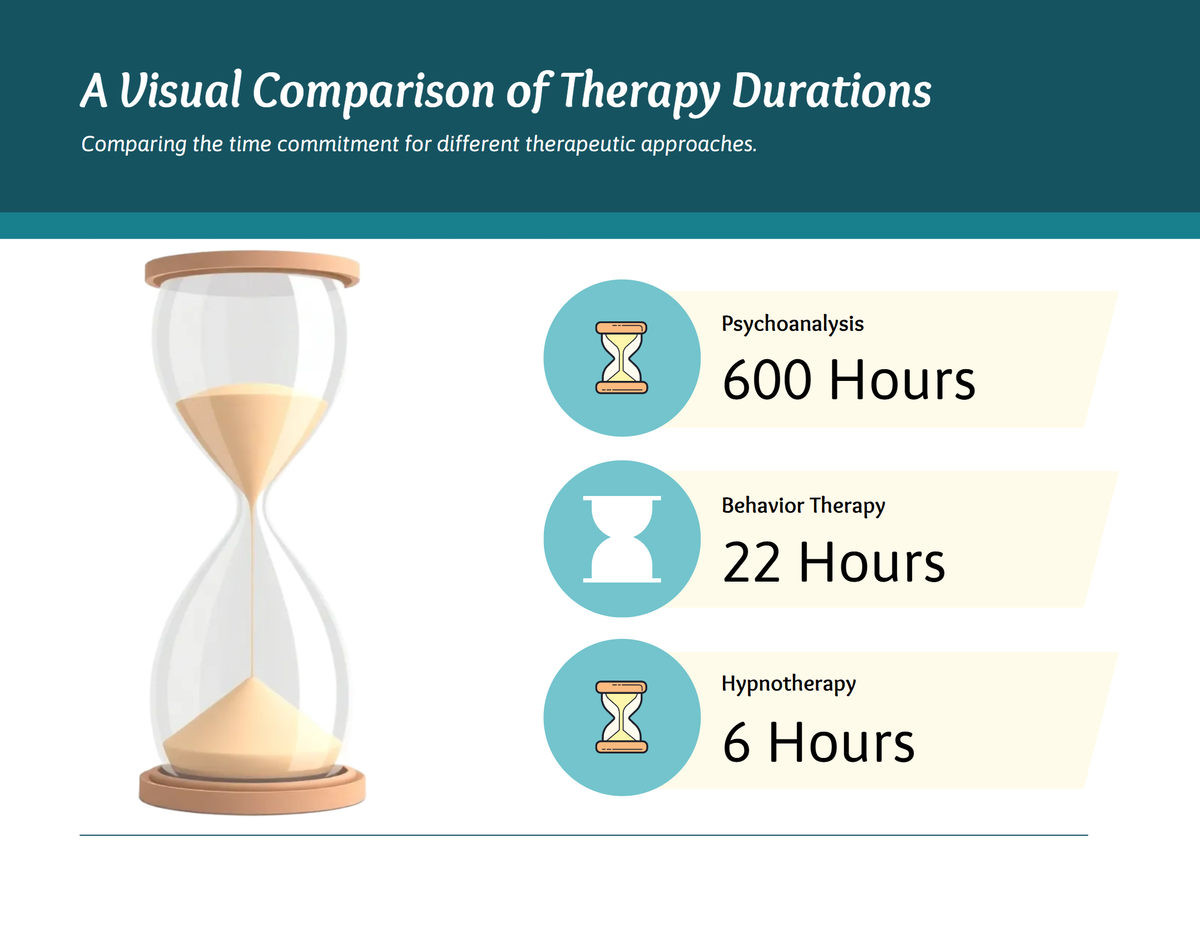
These statistics raise important questions about why slower, less effective approaches remain more widely known. The answer often lies in tradition rather than evidence. Just as medicine has evolved from bloodletting to antibiotics, therapeutic approaches continue evolving based on research findings rather than historical precedent.
Understanding Reconditioning Hypnotherapy: More Than Traditional Suggestion
Reconditioning hypnotherapy differs fundamentally from the stage hypnosis or simple suggestion techniques many people imagine. While traditional hypnosis often relies on direct suggestions during trance states, reconditioning hypnotherapy works at a deeper level to restructure subconscious patterns and responses.
The approach recognizes that most persistent patterns—whether anxiety responses, habit loops, or limiting beliefs—operate at the subconscious level. Traditional talk therapy attempts to change these patterns through conscious insight and willpower. While valuable, this approach often struggles because it's working against deeply ingrained subconscious programming.
Reconditioning hypnotherapy bypasses this limitation by accessing the subconscious mind directly. During the focused relaxation state, the critical factor—that part of the mind that resists change—becomes quieter. This allows new, healthier patterns to be installed at the same deep level where problematic patterns originated.
Neuroplasticity research supports why this approach works so effectively. The brain's ability to form new neural pathways is enhanced during focused attention states. Reconditioning hypnotherapy creates optimal conditions for rapid neuroplasticity, allowing old patterns to be replaced with new ones quickly and permanently.
The process involves several key components that distinguish it from other approaches. First, the practitioner guides clients into a deeply relaxed yet focused state. This isn't sleep or unconsciousness, but rather a heightened state of inner attention. In this state, the subconscious mind becomes more receptive to positive change.
Next, rather than simply suggesting changes, reconditioning hypnotherapy helps clients experience new patterns at a sensory level. If someone struggles with performance anxiety, they don't just hear suggestions about feeling confident—they actually experience confidence in their body and mind during the session. This experiential learning creates stronger, more lasting change.
The reconditioning aspect is crucial. Old patterns aren't just suppressed; they're replaced with new, healthier responses. This creates lasting transformation rather than temporary symptom management. When faced with previously challenging situations, clients automatically access their new, positive patterns rather than struggling against old ones.

Hypnotherapy vs Psychoanalysis: A Head-to-Head Comparison
The contrast between hypnotherapy and psychoanalysis extends far beyond session count and success rates. These approaches represent fundamentally different philosophies about how change occurs and where therapeutic focus should be directed.
Psychoanalysis operates on the premise that understanding the origins of problems will resolve them. Clients spend considerable time exploring childhood experiences, unconscious conflicts, and symbolic meanings. While this can provide valuable insights, the Barrios research suggests that insight alone doesn't necessarily translate to change.
Reconditioning hypnotherapy takes a more direct approach. Rather than spending months or years analyzing why a problem exists, it focuses on installing new patterns and responses. This doesn't mean the approach lacks depth—it simply prioritizes change over analysis.
The time difference is particularly striking for busy professionals and individuals with demanding schedules. Six sessions of hypnotherapy can typically be completed within 6-12 weeks, while psychoanalysis often requires years of commitment. For someone managing a career, family responsibilities, or business demands, this efficiency matters significantly.
Cost-effectiveness represents another crucial factor. While individual session rates may vary, the total investment differs dramatically. Six hypnotherapy sessions require substantially less financial commitment than 600 psychoanalysis sessions. This makes effective support accessible to more people.
The approaches also differ in their view of the conscious versus subconscious mind's role in change. Psychoanalysis primarily engages the conscious mind, believing that awareness and understanding drive transformation. Reconditioning hypnotherapy recognizes that since most patterns operate subconsciously, change is most effective when it occurs at that same level.
Perhaps most importantly, the approaches differ in their focus on past versus future. Psychoanalysis extensively explores historical experiences and their current impact. Reconditioning hypnotherapy acknowledges the past but focuses primarily on creating new futures and possibilities.
The Science of Brief Hypnotherapy Treatment: Why Less Can Be More
The effectiveness of brief hypnotherapy treatment isn't magic—it's neuroscience. Recent brain imaging research reveals why accessing the subconscious mind directly can create rapid, lasting change. During focused relaxation states, brain wave patterns shift into alpha and theta frequencies, the same states associated with accelerated learning and memory consolidation.
The concept of critical factor bypass is central to understanding hypnotherapy's efficiency. The critical factor is that part of the conscious mind that analyzes, judges, and often resists change. While this mental function serves important protective purposes, it can also maintain problematic patterns even when we consciously want to change them.
During hypnotic states, the critical factor becomes less active without disappearing entirely. This creates a window of enhanced receptivity where new patterns can be installed more easily. Rather than fighting against internal resistance, change can occur more naturally and quickly.
Neuroplasticity—the brain's ability to form new neural pathways—is enhanced during these focused attention states. Research shows that the brain changes more readily when we're in relaxed yet concentrated states of awareness. This explains why six sessions can accomplish what might take months or years through conscious effort alone.
The accelerated learning aspect is particularly relevant. In ordinary consciousness, we learn through repetition and practice over time. In focused hypnotic states, learning can occur more rapidly because the brain is in an optimal state for forming new connections and patterns.
This doesn't mean hypnotherapy creates overnight personality changes or unrealistic transformations. Instead, it accelerates natural change processes, helping people access resources and capabilities they already possess but may have difficulty reaching through conscious effort alone.
Real-World Applications: When Speed and Effectiveness Matter Most
The practical applications of reconditioning hypnotherapy extend across numerous areas where quick, effective change is essential. High-stress professions particularly benefit from approaches that can rapidly address performance anxiety, decision-making under pressure, and stress management.
Financial professionals, for example, often face situations where emotional regulation directly impacts performance and income. Traditional therapy might require months to address trading anxiety or fear-based decision making. With reconditioning hypnotherapy, these professionals can often overcome limiting patterns within weeks, allowing them to return to peak performance quickly.
Healthcare workers, emergency responders, and military personnel frequently need rapid solutions for stress, trauma responses, and burnout. The efficiency of brief hypnotherapy treatment makes it practical for these demanding careers where extended therapy commitments may be difficult to maintain.
Performance enhancement scenarios also showcase hypnotherapy's advantages. Athletes preparing for competition, speakers overcoming presentation anxiety, or students addressing test anxiety often have limited time before important events. Six sessions can typically address these concerns effectively within the available timeframe.
Entrepreneurs and business leaders benefit from hypnotherapy's efficiency when addressing patterns that impact leadership effectiveness, decision-making confidence, or work-life balance. The quick results allow them to maintain business momentum while addressing personal development needs.
Parents seeking support for family-related stress, relationship concerns, or personal patterns often appreciate approaches that don't require extensive time away from family responsibilities. The brief treatment model makes personal growth more accessible for busy parents.
Time-sensitive situations particularly highlight hypnotherapy's value. Someone preparing for a major life transition, facing a specific deadline, or dealing with an immediate challenge can often receive meaningful support within a compressed timeframe.
Ready to explore what hypnosis can do for you?
Reserve a free 30-minute phone consultation and get your questions answered.
Addressing Common Misconceptions About Hypnotherapy Success Rates

The 93% success rate often triggers skepticism, which is understandable given how dramatically it exceeds other therapeutic approaches. "If it's this effective, why isn't everyone using it?" is a reasonable question that deserves a thoughtful answer.
One factor is simply awareness. Many people's understanding of hypnosis comes from entertainment rather than therapeutic applications. Stage hypnosis and therapeutic hypnotherapy serve entirely different purposes, yet they're often confused in the public mind. This misconception can prevent people from exploring a highly effective approach.
Training and practitioner quality significantly impact results. The 93% success rate reflects properly trained practitioners using established reconditioning hypnotherapy protocols. Not all hypnosis training is equivalent, and practitioners with limited training may not achieve these results. This emphasizes the importance of working with qualified professionals.
Individual variation in response rates is another important consideration. While 93% represents the overall success rate, individual factors can influence outcomes. Motivation level, readiness for change, and specific presenting concerns all play roles in therapeutic success across all modalities.
The definition of "success" matters when evaluating any therapeutic approach. Barrios' research used specific criteria for recovery, which may differ from other studies' definitions. Understanding what success means in any therapeutic context helps set appropriate expectations.
Some people are naturally more analytical and prefer approaches that involve extensive discussion and insight development. While reconditioning hypnotherapy proves more effective statistically, individual preferences and learning styles remain important factors in choosing therapeutic approaches.
It's also worth noting that these success rates don't suggest hypnotherapy is appropriate for all concerns or that other approaches lack value. Different situations may benefit from different methodologies, and some people may prefer or require longer-term therapeutic relationships.
Conclusion: Making Informed Decisions About Your Mental Performance
Dr. Alfred Barrios' research provides compelling evidence that reconditioning hypnotherapy offers superior effectiveness compared to traditional therapeutic approaches. A 93% success rate in just 6 sessions represents a significant advancement in helping people achieve lasting personal transformation.
These findings empower individuals to make informed decisions about their path to change. Rather than assuming that effective support requires years of commitment, people can now consider evidence-based approaches that deliver results efficiently while respecting busy lifestyles and competing priorities.
The research doesn't diminish the value of other therapeutic approaches but rather expands options available to those seeking support. Understanding the comparative effectiveness of different modalities allows people to choose approaches aligned with their goals, timeframe, and preferences.
For those ready to explore efficient, effective approaches to personal transformation, reconditioning hypnotherapy offers a scientifically-supported path to rapid, lasting change. The evidence suggests that meaningful transformation doesn't have to take years—it can happen in weeks when the right approach meets readiness for change.
Your mental performance and personal wellbeing deserve approaches backed by evidence rather than tradition alone. Consider exploring what reconditioning hypnotherapy might offer for your specific goals and challenges.