

Setting Realistic Expectations for Your Hypnotherapy Journey
One of the most common questions people ask when considering hypnotherapy is: "How many sessions will I need?" It's a natural concern - you want to plan your time, budget, and set realistic expectations for your transformation journey. However, the answer isn't as straightforward as you might hope.
Unlike a prescription medication with a standard dosage, hypnotherapy sessions needed vary significantly from person to person. Think of it like learning a musical instrument - some people might play a simple melody after a few lessons, while others need more time to develop their skills. The same principle applies to hypnotherapy, where individual factors like your responsiveness to hypnotic techniques, the complexity of your goals, and your commitment to the process all influence your journey.
The "one-size-fits-all" approach simply doesn't work in therapeutic hypnosis because each person brings unique experiences, neural patterns, and subconscious programming to their sessions. Your mind's readiness to accept positive suggestions, your ability to relax into a hypnotic state, and even your expectations about the process can impact how quickly you experience meaningful changes.
This comprehensive guide will help you understand the realistic timeline for your hypnotherapy experience while emphasizing the personalized nature of session frequency and treatment duration. We'll explore the various factors that influence your therapy planning, examine typical session requirements for common concerns, and provide insights into maximizing your progress between appointments.
By the end of this article, you'll have a clear understanding of what to expect from your hypnotherapy journey, how to work effectively with your practitioner, and how to recognize when you've achieved sustainable transformation. Most importantly, you'll learn that the number of sessions isn't just about reaching a destination - it's about creating lasting change that supports your overall well-being.
Factors That Influence How Many Hypnotherapy Sessions You'll Need
Understanding what influences your hypnotherapy journey is crucial for setting realistic expectations. Several key factors determine both the number of sessions you'll need and the overall success of your experience.
Your individual response to hypnotic techniques plays a fundamental role in session frequency planning. Some people naturally enter hypnotic states easily, while others need more time to develop this skill. This isn't about being "good" or "bad" at hypnosis - it's simply how your unique mind processes relaxation and suggestion. People who meditate regularly or have experience with mindfulness practices often find themselves responding quickly to hypnotic inductions.

The complexity and duration of the issue you're addressing significantly impacts treatment duration. A simple habit you've had for six months will typically require fewer sessions than addressing a deep-rooted fear you've carried for decades. Recent challenges often respond more quickly because they haven't become as deeply embedded in your subconscious patterns.
Your personal commitment and practice between sessions can dramatically accelerate your progress. Clients who consistently practice self-hypnosis, follow through with suggested lifestyle adjustments, and actively engage with the process typically need fewer total sessions. Think of it as homework - the more you practice the techniques learned in session, the faster you'll internalize positive changes.
Session frequency also impacts your overall progress timeline. Weekly sessions often provide optimal momentum, allowing enough time between appointments to integrate changes while maintaining therapeutic continuity. Some people benefit from more intensive approaches with bi-weekly sessions initially, then transitioning to weekly or monthly maintenance appointments.
Age can influence both your response to hypnotherapy and the number of sessions needed. Younger minds often adapt quickly to new suggestions, while older adults might need more time to restructure long-established patterns. However, motivation and openness to change often matter more than age alone.
Your current lifestyle and stress levels affect how quickly you can implement positive changes. High-stress environments or major life transitions can slow initial progress but often make the eventual transformation more profound. People dealing with multiple stressors might benefit from addressing stress management first before tackling other goals.
Previous experiences with therapy or personal development work can accelerate your hypnotherapy results. If you've already done significant inner work, you might need fewer sessions to achieve your goals. Conversely, if this is your first experience with subconscious change work, you might need additional time to become comfortable with the process.
Your belief system and expectations also influence outcomes. People who approach hypnotherapy with realistic optimism and openness typically see results more quickly than those who are skeptical or expect immediate miracles. However, even initially skeptical clients often become enthusiastic supporters once they experience the process firsthand.
Ready to explore what hypnosis can do for you?
Reserve a free 30-minute phone consultation and get your questions answered.
Typical Session Requirements by Common Issues
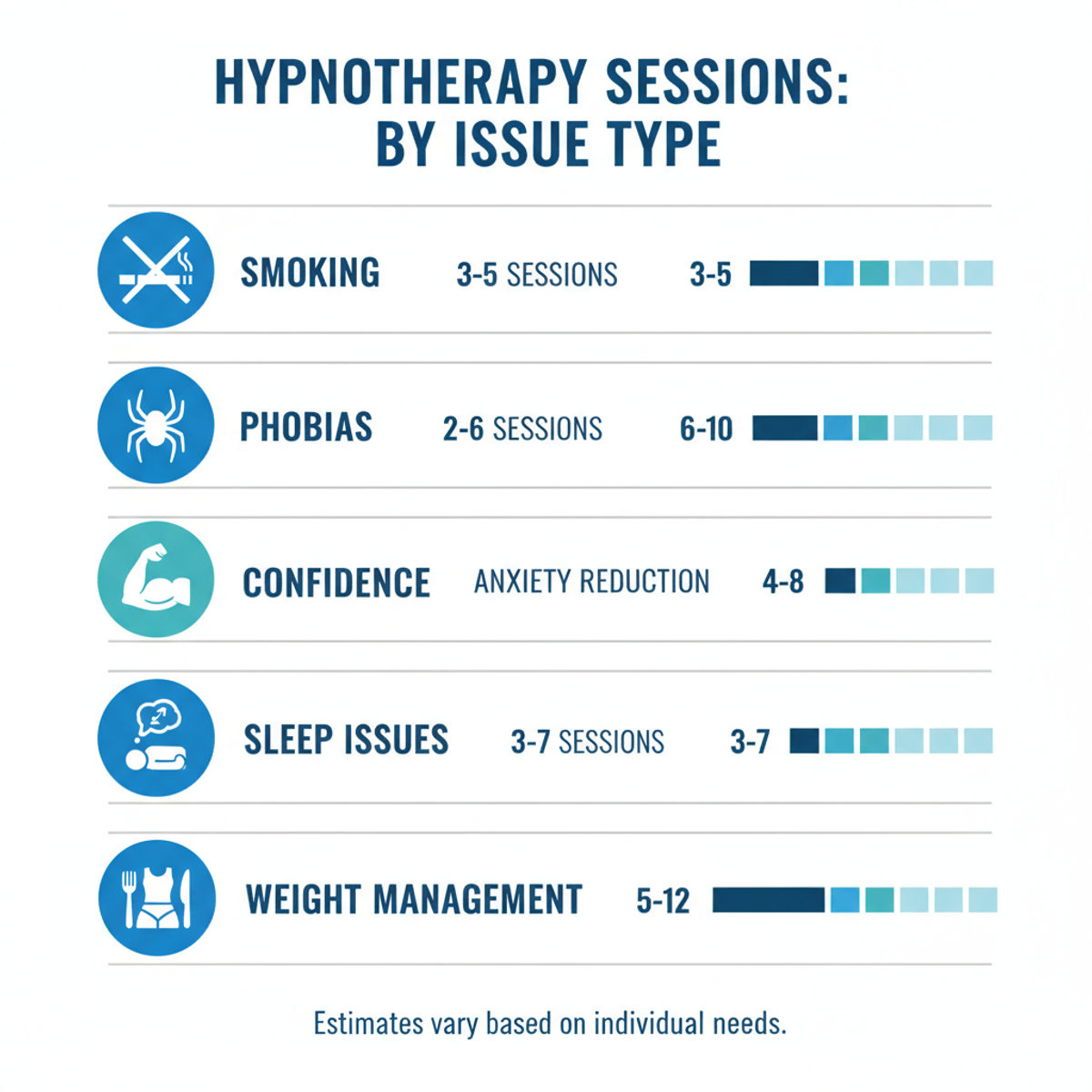
Different concerns typically require varying numbers of hypnotherapy sessions, though individual experiences can differ significantly from these general guidelines.
Habit Modification (3-6 sessions)
Smoking cessation programs often see success within 3-5 sessions when clients are truly ready to quit. The key is ensuring genuine motivation rather than external pressure from family or doctors. Successful smoking cessation typically involves one session focused on breaking the physical habit patterns, followed by sessions addressing the emotional and social aspects of smoking. Many practitioners offer intensive programs that compress this timeline into fewer, longer sessions.
Weight management support usually requires 4-6 sessions to address both eating behaviors and the underlying emotional relationships with food. Early sessions focus on identifying triggers and establishing healthier patterns, while later sessions reinforce new behaviors and address emotional eating. The most successful clients combine hypnotherapy sessions with practical nutrition education and gradual lifestyle changes.
Anxiety and Stress Management (4-8 sessions)
Performance anxiety, whether related to public speaking, sports, or professional situations, typically responds well within 4-6 sessions. Initial sessions teach relaxation techniques and help identify anxiety triggers, while subsequent sessions build confidence and rehearse successful performance scenarios through guided visualization.
General stress reduction often requires 6-8 sessions to address the multiple factors contributing to chronic stress. Sessions typically cover relaxation techniques, perspective shifts, and developing healthy coping strategies. Clients dealing with workplace stress or relationship tensions might need additional sessions to address specific situational factors.
Phobias and Fears (2-8 sessions)
Simple phobias, such as fear of flying or specific animals, often show improvement within 2-4 sessions. These focused fears typically respond quickly to systematic desensitization techniques combined with hypnotic relaxation. The key is gradually building comfort while in a relaxed, safe state.
Complex phobias involving multiple triggers or social situations usually require 6-8 sessions. These might include social anxiety, agoraphobia, or fears connected to past traumatic experiences. Treatment involves building general confidence and resilience alongside addressing specific fear responses.
Sleep Issues (3-6 sessions)
Most sleep-related concerns respond within 3-5 sessions, particularly when the issues are related to stress, worry, or poor sleep habits rather than medical conditions. Sessions typically focus on creating relaxing bedtime routines, addressing racing thoughts, and establishing positive sleep associations. Clients often notice improvement after the first session, with continued progress over subsequent appointments.
Confidence and Self-Esteem Building (6-10 sessions)
Building lasting confidence typically requires 6-10 sessions because it involves restructuring core beliefs about yourself and your capabilities. Early sessions focus on identifying limiting beliefs and negative self-talk patterns, while later sessions build new, empowering thought patterns and behavioral responses. This work often creates profound, lasting changes that impact multiple life areas.
Pain Management Support (4-12 sessions)
Chronic pain support varies widely depending on the condition's complexity and duration. Simple tension headaches might improve within 4-6 sessions, while complex chronic pain conditions might require 8-12 sessions or ongoing maintenance appointments. Sessions typically focus on relaxation techniques, pain perception modification, and developing effective coping strategies. It's important to note that hypnotherapy serves as a complementary approach alongside appropriate medical care.
The key to success with any issue is maintaining realistic expectations while staying committed to the process. Some clients experience dramatic improvements after just one session, while others need time to build momentum. Your practitioner can help adjust expectations based on your individual response and progress patterns.
Understanding Session Frequency and Scheduling
The timing and frequency of your hypnotherapy sessions can significantly impact both the total number of sessions needed and your overall success. Understanding optimal scheduling approaches helps maximize your investment in positive change.
Weekly appointments provide the most common and effective rhythm for most clients. This frequency allows enough time between sessions to practice new techniques and integrate suggestions while maintaining therapeutic momentum. Weekly sessions prevent you from losing progress between appointments while giving your subconscious mind adequate time to process and implement changes.
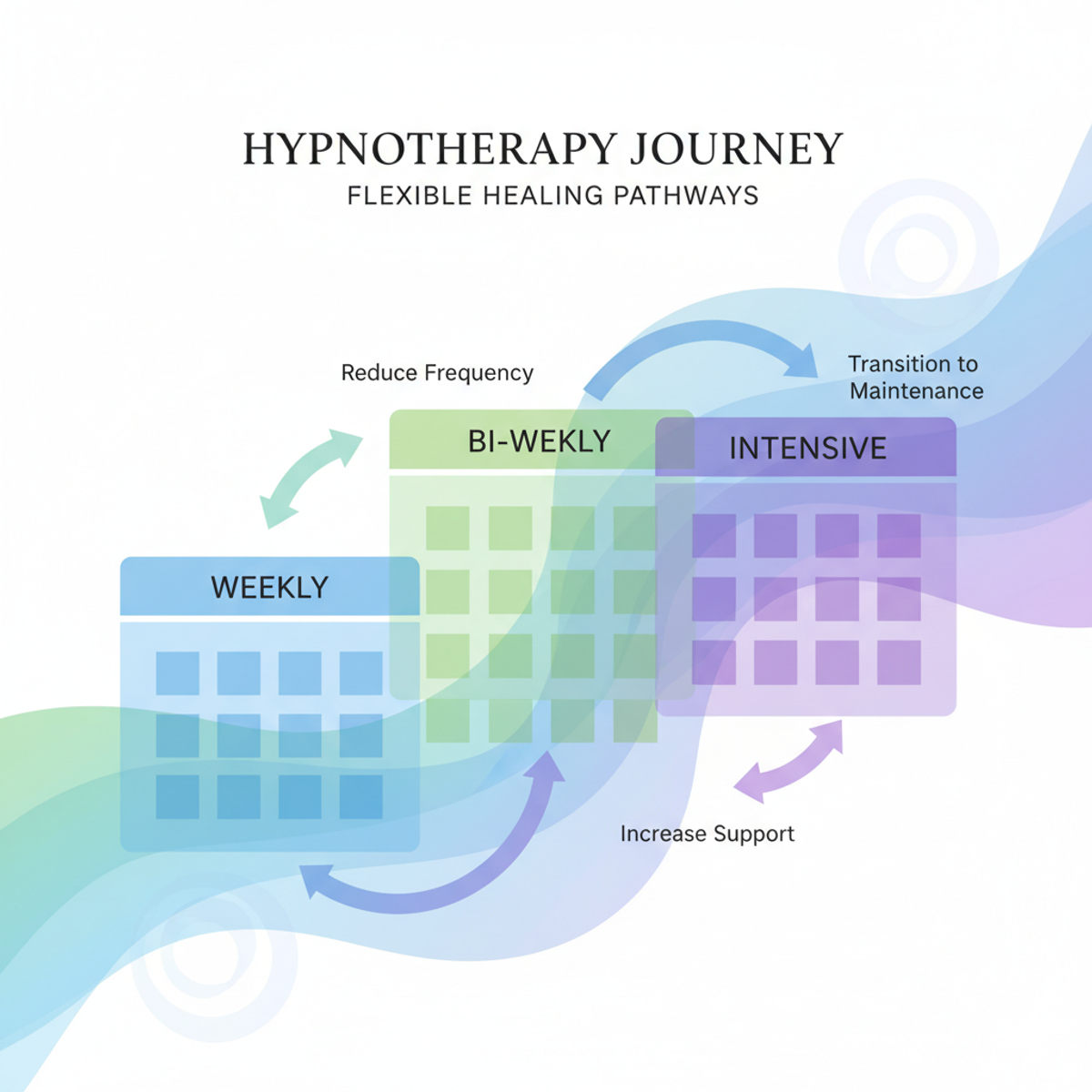
Bi-weekly appointments work well for certain situations, particularly for clients with busy schedules or those addressing less urgent concerns. This approach might extend the total duration of your program but can be more sustainable for long-term success. Some people find bi-weekly sessions less overwhelming and easier to integrate into demanding lifestyles.
Intensive treatment approaches involve multiple sessions within a short timeframe, such as three sessions over one week. This method can be highly effective for specific issues like smoking cessation or simple phobias where rapid change is possible and desirable. Intensive approaches work best when you can fully focus on the change process without major distractions.
Many successful hypnotherapy programs follow a front-loaded approach: more frequent sessions initially (weekly or bi-weekly) that gradually space out as you develop confidence in self-management techniques. You might start with four weekly sessions, then transition to monthly check-ins, and eventually move to quarterly maintenance appointments.
Maintenance sessions play a crucial role in long-term success, particularly for complex issues or significant lifestyle changes. These periodic appointments help reinforce positive changes, address new challenges, and prevent regression to old patterns. Think of maintenance sessions like tune-ups for your mind - they help keep positive changes running smoothly.
Session frequency also depends on your current life circumstances. During stressful periods or major transitions, more frequent sessions provide additional support and stability. Conversely, when life is stable and you're successfully implementing changes, you can often extend time between appointments.
The spacing between sessions affects how your brain processes and integrates new information. Too frequent sessions might not allow adequate integration time, while sessions spaced too far apart can lose therapeutic momentum. Your practitioner can help determine the optimal frequency based on your response patterns and lifestyle factors.
What Happens During Your Sessions - A Timeline Approach
Understanding the typical progression of hypnotherapy sessions helps set realistic expectations and maximize your engagement with the process.
Sessions 1-2: Assessment and Initial Hypnotic Work
Your first session typically involves comprehensive discussion about your goals, history, and current challenges. This assessment phase helps your practitioner understand your unique situation and design a personalized approach. You'll likely experience your first hypnotic induction during this session, which helps both you and your practitioner assess your responsiveness to different techniques.
The second session usually builds on initial insights while deepening your comfort with the hypnotic process. Many people notice increased relaxation abilities and begin experiencing subtle shifts in their thinking patterns. These early sessions establish the foundation for all subsequent work and help build trust in the therapeutic relationship.
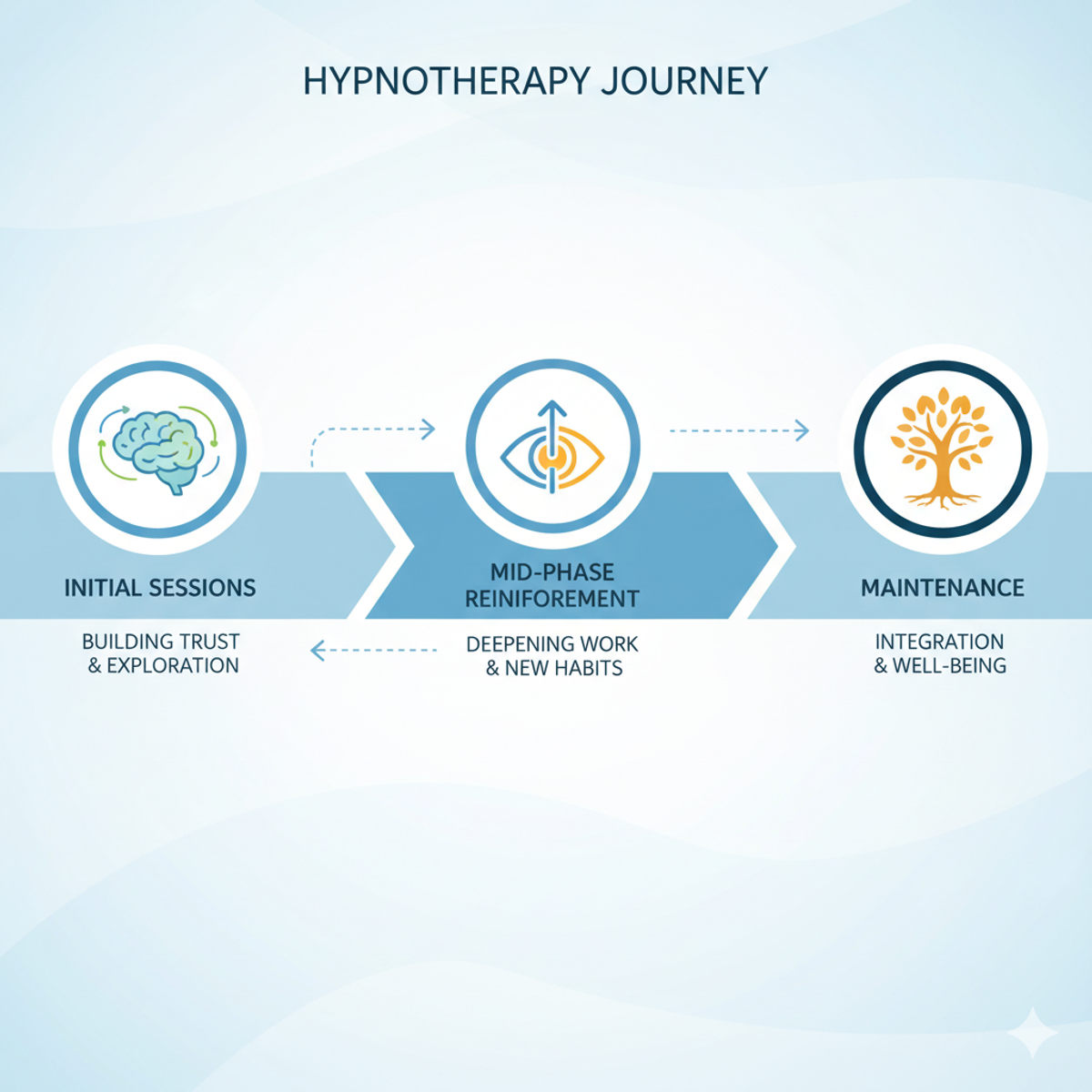
Sessions 3-4: Building Momentum and Deepening Techniques
Sessions three and four typically focus on building momentum with your specific goals while deepening your hypnotic experience. You'll likely notice increased ease entering relaxed states and may begin experiencing more vivid visualizations or stronger responses to positive suggestions.
During this phase, your practitioner often introduces more advanced techniques tailored to your specific needs and responses. This might include specialized inductions, targeted suggestion work, or techniques like regression therapy or parts work, depending on your goals and progress.
Sessions 5-8: Integration and Reinforcement
The middle phase of your hypnotherapy program focuses on reinforcing positive changes and integrating new patterns into daily life. You'll typically notice more consistent improvements in your target areas and increased confidence in managing challenges independently.
Sessions during this phase often emphasize practical application and problem-solving. Your practitioner might help you rehearse challenging situations, strengthen specific coping strategies, or address any obstacles to progress that have emerged.
Beyond Session 8: Maintenance and Advanced Work
Sessions beyond the initial series typically focus on maintenance, advanced techniques, or addressing new goals that have emerged from your initial success. Some clients discover that resolving their primary concern reveals other areas they'd like to improve, leading to expanded therapeutic work.
This phase might involve monthly or quarterly check-ins to reinforce progress and address any new challenges. Many clients find these maintenance sessions invaluable for staying on track with their goals and continuing their personal development journey.
The timeline isn't rigid - some people achieve their goals faster, while others need more time for certain phases. The key is maintaining open communication with your practitioner about your progress and any concerns that arise during the process.
Maximizing Your Progress Between Sessions
What you do between hypnotherapy sessions often determines the overall success and efficiency of your program. Active participation in your transformation process can significantly reduce the total number of sessions needed while creating more lasting change.
Self-hypnosis practice forms the cornerstone of between-session work. Most practitioners provide recordings or teach self-hypnosis techniques that allow you to reinforce session content daily. Consistent practice, even for just 10-15 minutes daily, helps embed positive suggestions more deeply and accelerates your progress. Think of self-hypnosis as your daily mental maintenance routine.
Following through with therapeutic suggestions requires conscious attention and commitment. If your session included suggestions about new behavioral responses or thought patterns, actively implementing these recommendations in daily situations strengthens the subconscious programming. Keep a small notebook to track instances where you successfully applied new patterns or caught yourself reverting to old habits.
Lifestyle adjustments that support your goals create an environment where positive changes can flourish. This might involve modifying your physical environment, adjusting daily routines, or making changes to relationships and activities that either support or hinder your progress. Small, consistent adjustments often prove more effective than dramatic lifestyle overhauls.
Mindful awareness of your internal dialogue between sessions helps identify when old patterns arise and provides opportunities to consciously choose new responses. Notice self-talk, emotional reactions, and behavioral impulses without judgment - simply observing these patterns helps weaken their automatic nature.
Practicing visualization and mental rehearsal outside of formal sessions reinforces positive imagery work done during appointments. Spend a few minutes daily visualizing yourself successfully handling challenging situations or embodying your desired changes. This mental practice helps program your subconscious for success in real-world situations.
Maintaining a progress journal helps track subtle improvements that might otherwise go unnoticed. Record changes in thoughts, feelings, behaviors, or life circumstances that relate to your goals. This documentation provides valuable feedback for your practitioner and helps maintain motivation during challenging periods.

Planning when to schedule follow-up appointments depends on your progress and comfort level with independent management of your changes. Some people benefit from scheduling their next session before leaving each appointment, while others prefer to assess their progress and schedule as needed. Discuss scheduling preferences with your practitioner to find the approach that best supports your success.
Signs You're Ready to Conclude Your Hypnotherapy Program
Recognizing when you've achieved sustainable change helps you transition confidently from regular sessions to independent maintenance of your progress. Several key indicators suggest you're ready to conclude your intensive hypnotherapy work.
Recognizing sustainable change means noticing that positive behaviors and thought patterns have become your new normal rather than requiring conscious effort. You handle previously challenging situations with increased ease and confidence, and setbacks become temporary rather than derailing your overall progress. The changes feel integrated into your identity rather than like something you're trying to maintain.
Confidence in self-management techniques indicates you've internalized the tools and strategies learned during sessions. You can effectively use self-hypnosis, relaxation techniques, and coping strategies independently. When challenges arise, you instinctively reach for healthy responses rather than reverting to old patterns. You feel equipped to handle future obstacles without immediate professional support.
Achievement of initial therapeutic goals provides concrete evidence of program success. Review your original objectives and assess your progress honestly. While perfect achievement isn't always realistic, substantial improvement in your target areas suggests successful program completion. Sometimes, achieving initial goals reveals new areas for growth, but this represents expansion rather than failure to reach original objectives.
You might notice increased resilience in areas beyond your original concerns. Many clients find that successful hypnotherapy work creates positive ripple effects throughout their lives, improving relationships, work performance, or overall life satisfaction. This broader improvement often indicates deep, lasting change rather than superficial symptom management.
Planning for future maintenance sessions helps preserve your progress long-term. Even when you're ready to conclude regular sessions, scheduling periodic check-ins every few months can help maintain momentum and address new challenges before they become problematic. Think of maintenance sessions as preventive care for your mental and emotional well-being.
Curious if hypnosis is a good fit for your goals?
Book a free 30-minute phone consultation and get tailored guidance from Vittoria Fazio.
Working with Your Hypnotherapy Practitioner for Optimal Results
The therapeutic relationship forms the foundation of successful hypnotherapy outcomes. Effective collaboration with your practitioner can significantly impact both the efficiency and effectiveness of your session series.
Open communication about progress and concerns ensures your practitioner can adjust techniques and approaches based on your individual response. Share both successes and challenges honestly - your practitioner needs complete information to provide optimal support. If certain techniques don't resonate with you or if you're experiencing unexpected reactions, discuss these observations openly.
Regular feedback about your between-session experiences helps your practitioner understand how suggestions and techniques are integrating into your daily life. This information allows for fine-tuning of approaches and identification of any obstacles to progress. Your practitioner can't read your mind - clear communication about your experience guides the therapeutic process.
Adjusting therapy planning as needed demonstrates the personalized nature of effective hypnotherapy. Your initial treatment plan provides a roadmap, but flexibility allows for modifications based on your progress, changing circumstances, or emerging insights. Some clients progress faster than anticipated, while others need additional time or different approaches for optimal results.
Setting realistic milestones together helps maintain motivation and track progress effectively. Work with your practitioner to establish specific, measurable goals for different phases of your program. These milestones should be challenging enough to promote growth while remaining achievable to maintain confidence and momentum.
Trust in the therapeutic relationship allows for deeper hypnotic work and more profound changes. As a certified master practitioner trained through the IFHEC Institut de Formation en Hypnose et en Coaching and the National Association of Naturopaths, maintaining ethical standards and client confidentiality forms the cornerstone of effective practice. This professional foundation creates the safety necessary for meaningful transformation work.

Your hypnotherapy journey represents a collaborative partnership between your conscious commitment to change and professional guidance in accessing your subconscious resources for transformation. The number of sessions needed ultimately depends on your unique circumstances, goals, and response to the process, but with realistic expectations and active participation, most people achieve meaningful, lasting improvements within a reasonable timeframe.