
Introduction: Understanding the Power of Hypnotherapy for Phobias
Fear is a natural human emotion designed to protect us from danger. However, when fears become overwhelming and interfere with daily life, they transform into phobias that can severely limit our experiences and happiness. If you find yourself avoiding situations, places, or activities due to intense fear, you're not alone – millions of people worldwide struggle with phobias that impact their quality of life.
Hypnotherapy for phobias offers a gentle yet powerful approach to addressing these deeply rooted fears. Unlike surface-level interventions, therapeutic hypnosis works directly with the subconscious mind where phobias originate and persist. This natural, evidence-based method helps individuals access and reframe the underlying patterns that create fearful responses.
This comprehensive guide will explore how hypnotherapy can support you in overcoming limiting fears and reclaiming your freedom. You'll discover the science behind phobia development, understand how therapeutic hypnosis works, and learn what to expect from this transformative process. Whether you're dealing with specific fears like flying or spiders, or broader anxieties that affect social situations, this information will help you make informed decisions about your path forward.
Your journey toward overcoming limiting fears begins with understanding. As you explore these evidence-based approaches, remember that lasting change is possible when you work with the mind's natural capacity for healing and growth.
What Are Phobias? Types and Common Symptoms
Phobias differ significantly from normal fears in their intensity, persistence, and impact on daily functioning. While everyone experiences occasional worry or nervousness, phobias involve an overwhelming and irrational fear response that persists even when the perceived threat is minimal or absent. These intense reactions can trigger immediate physical and emotional symptoms that interfere with work, relationships, and personal fulfillment.
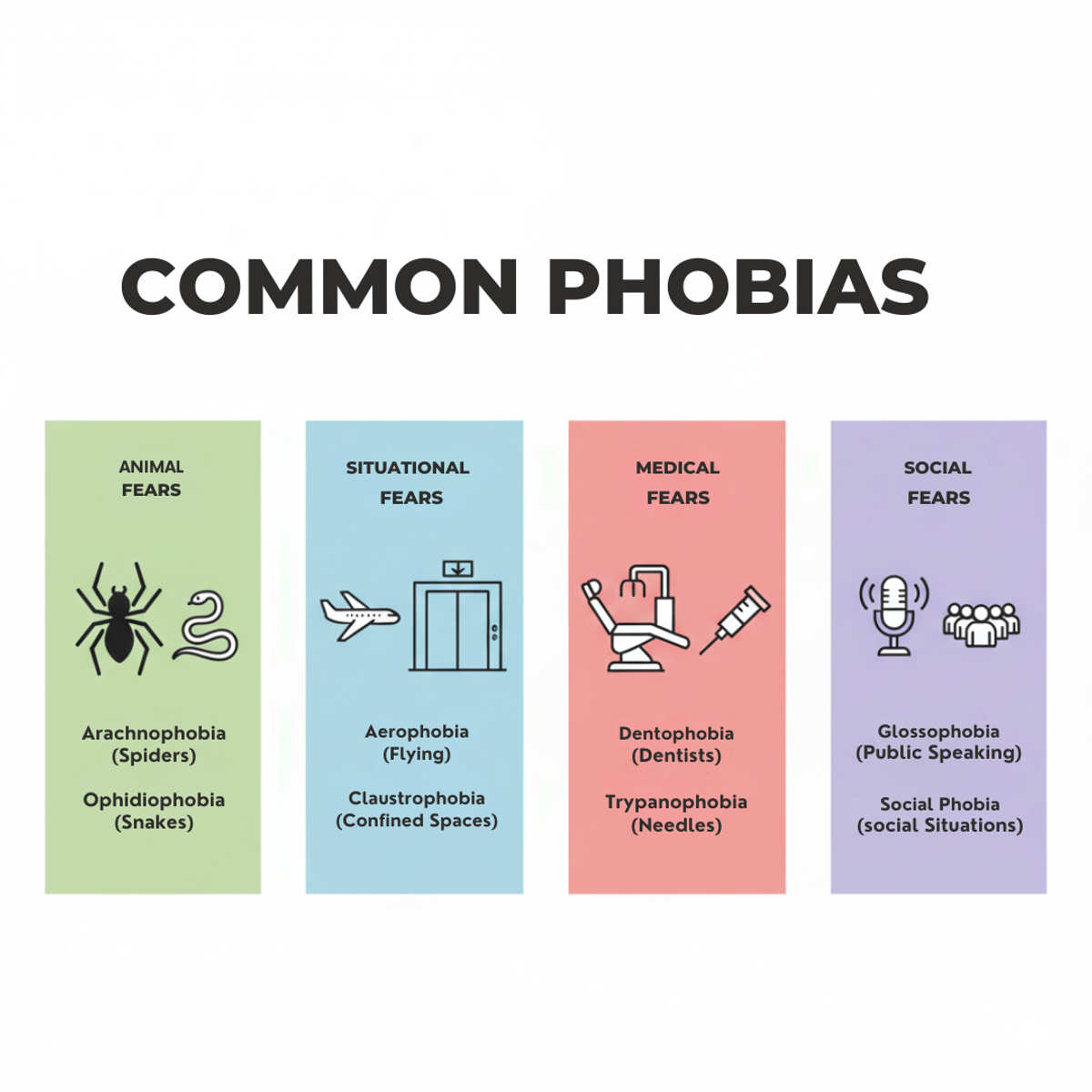
Specific phobias represent the most common category, focusing on particular objects or situations. Animal phobias frequently involve spiders, snakes, dogs, or insects, often developing after early negative experiences or learned responses from family members. Height-related fears can make climbing stairs, crossing bridges, or looking out windows extremely distressing. Flying phobias affect millions of travelers, causing anticipatory anxiety weeks before scheduled trips and sometimes preventing important personal or professional opportunities.
Medical and dental phobias create significant barriers to healthcare, leading some individuals to postpone necessary procedures or avoid routine checkups entirely. These fears often stem from past traumatic experiences, fear of pain, or feeling trapped and helpless during medical interventions.
Social phobias and performance anxiety involve intense fear of judgment, embarrassment, or humiliation in social situations. Public speaking anxiety affects approximately 75% of the population to some degree, while broader social anxiety can make everyday interactions like ordering food or attending gatherings feel overwhelming. These fears often develop during adolescence when social acceptance feels particularly crucial.
Agoraphobia and complex phobias involve multiple interconnected fears that can severely restrict movement and independence. Agoraphobia typically includes fear of being trapped, helpless, or embarrassed in various situations, leading some individuals to become housebound. Complex phobias often combine specific triggers with broader anxiety patterns, creating layers of avoidance behaviors.
The physical symptoms of phobias can include rapid heartbeat, sweating, trembling, shortness of breath, nausea, dizziness, and muscle tension. Emotionally, individuals often experience intense dread, panic, feelings of unreality, and an overwhelming urge to escape. These symptoms can appear immediately upon encountering the feared situation or even when simply thinking about potential exposure.
The Science Behind Hypnotherapy for Phobias
Understanding how phobias develop in the subconscious mind reveals why hypnotherapy can be particularly effective for addressing these deep-rooted patterns. Phobias typically form through intense emotional experiences that create lasting impressions in the brain's memory systems. These experiences become encoded with strong emotional associations, often during childhood when the mind is most impressionable and less capable of rational analysis.
The amygdala, often called the brain's "alarm system," plays a central role in phobia development and maintenance. This almond-shaped structure processes emotional memories and triggers fight-or-flight responses when it perceives threats. In phobic responses, the amygdala can react to harmless stimuli as if they represent genuine danger, bypassing logical thinking and creating immediate fear responses.
Once established, phobic patterns become self-reinforcing through avoidance behaviors. Each time someone avoids their feared situation, the temporary relief reinforces the belief that the fear was justified, strengthening the neural pathways associated with the phobic response. This creates a cycle where the fear grows stronger over time, even without additional negative experiences.
Traditional talk therapy, while valuable for many conditions, may have limitations when addressing phobias because it primarily engages the conscious, analytical mind. Since phobic responses originate in deeper brain structures that operate below conscious awareness, purely cognitive approaches may struggle to access and modify these automatic patterns. The emotional brain often overrides rational understanding, which explains why someone can intellectually know their fear is irrational while still experiencing intense physical reactions.
Hypnosis accesses and works with these subconscious patterns by creating a focused state of attention where the analytical mind becomes quieter. In this relaxed state, the subconscious mind becomes more receptive to new information and alternative perspectives. This allows for direct communication with the part of the mind that maintains phobic responses, creating opportunities to introduce new associations and responses.
Research supporting hypnotherapy effectiveness for phobias includes multiple controlled studies demonstrating significant improvement rates. A meta-analysis of hypnosis studies found that approximately 90% of participants experienced meaningful reduction in phobic symptoms, with many achieving complete resolution. Brain imaging studies show that hypnosis can influence the same neural networks involved in phobic responses, including activity in the amygdala, prefrontal cortex, and limbic system. These findings provide scientific validation for the observed clinical improvements that individuals experience through therapeutic hypnosis.

How Hypnotherapy Works for Phobia Treatment
The therapeutic hypnosis process for addressing phobias involves several interconnected approaches that work together to create lasting change. Understanding these methods helps demystify the process and highlights why hypnotherapy can be remarkably effective for fear-related challenges.
Accessing the subconscious mind safely forms the foundation of all hypnotic work. Contrary to popular misconceptions, therapeutic hypnosis creates a state of focused relaxation rather than unconsciousness or loss of control. Clients remain aware and actively participate in the process while achieving deeper access to subconscious patterns. This relaxed state, similar to the moments just before falling asleep or while absorbed in a good book, allows the mind to become more receptive to positive suggestions and new perspectives.
Systematic desensitization through hypnosis gradually reduces fear responses by introducing the feared stimulus in a safe, controlled way. Rather than facing fears directly, clients first develop strong resources for calmness and confidence while in hypnosis. They then imagine encountering their fear while maintaining these positive states, starting with very mild exposures and gradually increasing intensity as comfort levels improve. This process allows the nervous system to learn new responses without the overwhelming intensity that maintains phobic patterns.
For example, someone with flying anxiety might begin by simply imagining reading about airplanes while feeling completely relaxed and safe. Over successive sessions, they might visualize looking at airplane pictures, visiting an airport, boarding a plane, and eventually enjoying a smooth flight – all while maintaining feelings of calm confidence. This gradual approach respects the mind's natural protective mechanisms while gently introducing new possibilities.
Cognitive restructuring techniques in hypnosis help identify and modify the underlying beliefs and thought patterns that support phobic responses. Many phobias involve catastrophic thinking, overestimation of danger, or beliefs about personal vulnerability. Through gentle exploration in the hypnotic state, clients can examine these patterns from a more objective perspective and develop more balanced, realistic viewpoints.
Building new positive associations replaces fearful memories and expectations with resourceful states and positive imagery. The subconscious mind learns through association and repetition, so creating strong positive experiences related to formerly feared situations helps establish new neural pathways. Clients might develop mental rehearsals where they successfully navigate challenging situations while feeling confident, calm, and capable.
Integration and reinforcement methods ensure that positive changes developed during sessions become lasting improvements in daily life. This includes teaching self-hypnosis techniques for ongoing practice, creating personalized audio recordings, and developing specific strategies for real-world application. Many practitioners provide homework exercises that help bridge the gap between session work and practical implementation.
The process also addresses any secondary benefits that fears might provide, such as increased attention from others or avoidance of unwanted responsibilities. By acknowledging these aspects compassionately and finding healthier ways to meet underlying needs, the therapeutic process becomes more comprehensive and lasting.
Throughout this work, the pace remains entirely client-centered, ensuring that individuals never feel overwhelmed or forced to confront fears before they feel ready. This respectful approach builds confidence and trust in the process while honoring each person's unique healing timeline.

See how hypnosis can support your goals
Book a free 30-minute phone consultation to get personalized guidance.
Common Phobias Successfully Addressed with Hypnotherapy
Hypnotherapy has shown remarkable effectiveness across a wide range of phobic responses, with certain categories responding particularly well to these gentle yet powerful techniques. Understanding successful applications can help individuals recognize whether their specific concerns might benefit from this approach.
Animal phobias frequently respond quickly to hypnotherapeutic interventions because they often involve specific triggers with clear origins. Spider fears, which affect approximately 3-15% of the population, can often be significantly reduced within just a few sessions. The process typically involves developing feelings of safety and control while gradually introducing positive or neutral associations with spiders. Many individuals discover that their fear diminished after understanding spiders' beneficial role in nature and developing a sense of peaceful coexistence rather than terror.
Dog phobias, often stemming from childhood experiences, can transform remarkably through hypnosis. Clients learn to distinguish between genuinely threatening situations and normal dog behavior, while developing confidence in their ability to read canine body language and respond appropriately. Snake fears similarly benefit from education combined with deep relaxation and positive imagery, helping individuals develop rational perspectives about actual risks versus perceived dangers.
Situational fears represent another area where hypnotherapy demonstrates consistent success. Flying phobias affect millions of people and can severely restrict travel opportunities. Through systematic desensitization and education about flight safety, individuals often progress from panic attacks at the thought of flying to enjoying travel experiences. The process frequently includes learning about airplane mechanics, understanding turbulence, and developing personal calmness techniques for use during flights.
Driving fears, whether related to accidents, highway anxiety, or general loss of control, often improve significantly through hypnotic intervention. Clients develop confidence in their abilities, learn to distinguish between reasonable caution and excessive worry, and create mental rehearsals of successful driving experiences. Elevator phobias similarly benefit from gradual exposure combined with relaxation techniques and positive associations.
Medical and dental phobias create serious health risks when they prevent individuals from seeking necessary care. Hypnotherapy can address both the fear of procedures and underlying concerns about pain, loss of control, or past traumatic experiences. Many clients learn self-hypnosis techniques for use during medical appointments, significantly improving their comfort levels and willingness to maintain regular healthcare.
Needle phobias respond particularly well to hypnotic techniques because the fear often involves anticipatory anxiety that builds before medical procedures. By learning to maintain calm states and reframe the experience, individuals can receive necessary medical care without overwhelming distress.
Social anxiety and public speaking fears represent complex challenges that often involve multiple layers of concern about judgment, performance, and social acceptance. Hypnotherapy helps individuals develop genuine confidence, prepare mentally for social situations, and reduce the physical symptoms that can intensify embarrassment. Public speaking skills often improve dramatically when the underlying anxiety decreases, allowing natural abilities and personality to emerge.
Environmental phobias such as weather-related fears, confined spaces, or heights often stem from feelings of helplessness or lack of control. Hypnotic work helps individuals develop internal resources for managing these situations while building confidence in their ability to cope with challenging circumstances.
Success rates vary among individuals, but most people experience meaningful improvement within 4-8 sessions, with many achieving complete resolution of their phobic responses. The key factors influencing success include motivation for change, willingness to practice recommended techniques, and trust in the therapeutic process.

What to Expect During Your Hypnotherapy Sessions
Understanding the hypnotherapy process helps create realistic expectations and reduces any anxiety about beginning this journey. Each practitioner may have slightly different approaches, but most follow similar frameworks designed to create safety, trust, and optimal conditions for positive change.
The initial consultation and assessment process typically involves a comprehensive discussion about your specific fears, their history, and impact on your daily life. A qualified practitioner will explore when your phobia first developed, any triggering events you remember, previous attempts at addressing the issue, and your specific goals for change. This conversation helps create a personalized approach that honors your unique situation and concerns.
During this first meeting, you'll also learn about hypnosis itself, including what it feels like, how it works, and what to expect during sessions. Many practitioners address common myths and misconceptions about hypnosis, helping you understand that you'll remain in complete control throughout the process. This educational component often significantly reduces any nervousness about the hypnotic experience itself.
Creating a safe, supportive environment remains paramount throughout all sessions. Professional practitioners prioritize your comfort, ensuring that you feel heard, respected, and completely safe to explore your concerns. The physical environment typically features comfortable seating, appropriate lighting, and freedom from interruptions. More importantly, the emotional environment emphasizes trust, confidentiality, and complete acceptance of your experiences without judgment.
The hypnotic induction experience varies among individuals but generally involves progressive relaxation and focused attention. You might be guided through breathing techniques, muscle relaxation, or peaceful imagery that helps your mind settle into a more receptive state. Contrary to popular misconceptions, you won't lose consciousness or awareness. Instead, you'll likely feel deeply relaxed while remaining alert and engaged in the process.
Most people describe the hypnotic state as pleasant and peaceful, similar to daydreaming or the relaxed feeling just before falling asleep. You'll hear everything that's said and can respond to questions or end the session at any time if needed. This collaborative approach ensures that you never feel out of control or vulnerable.
Working through fear responses gently involves gradual exposure to your concerns while maintaining states of calm and confidence. Your practitioner might guide you through imagining successful encounters with your feared situation, or help you explore and reframe the underlying beliefs that support your phobic responses. This work proceeds at a pace that feels comfortable and manageable, never forcing you to confront fears before you feel ready.
Post-session integration and homework help translate session insights into practical daily life improvements. Many practitioners provide audio recordings for home practice, specific exercises for building confidence, or suggested real-world applications of skills developed during sessions. These between-session activities reinforce positive changes and accelerate overall progress.
Typical treatment timelines vary considerably based on the specific phobia, its duration and intensity, and individual factors. Simple phobias with clear triggers often show improvement within 3-6 sessions, while more complex fears or those involving multiple triggers may require 6-12 sessions. Many people notice positive changes after their very first session, though lasting transformation typically develops over several weeks of consistent work.
Progress markers include reduced physical symptoms when thinking about or encountering your fear, increased willingness to approach previously avoided situations, improved sleep and general anxiety levels, and growing confidence in your ability to handle challenging circumstances. These improvements often extend beyond the specific phobia, enhancing overall resilience and life satisfaction.

Benefits of Choosing Hypnotherapy for Fear Management
Selecting hypnotherapy for addressing phobic responses offers numerous advantages that distinguish it from other approaches to fear management. Understanding these benefits helps individuals make informed decisions about their healing journey and set appropriate expectations for their experience.
Rapid and lasting results represent one of the most significant advantages of hypnotherapeutic approaches. While traditional talk therapy might require months or years to achieve meaningful change, many individuals experience substantial improvement in their phobic responses within just a few sessions. This efficiency occurs because hypnosis works directly with the subconscious patterns that maintain fearful responses, rather than relying solely on conscious understanding and willpower.
The lasting nature of these improvements stems from the fundamental changes in neural patterns that occur through hypnotic work. Rather than simply managing symptoms or developing coping strategies, therapeutic hypnosis helps create new automatic responses at the subconscious level. This means that positive changes tend to persist naturally without constant conscious effort or maintenance.
Non-invasive, natural approaches appeal to many individuals who prefer to work with their mind's inherent healing capabilities rather than relying on medications or more intensive interventions. Hypnotherapy harnesses the brain's natural neuroplasticity – its ability to form new neural connections and patterns throughout life. This process works with, rather than against, the mind's protective mechanisms, creating sustainable change through cooperation rather than force.
The absence of side effects represents another significant advantage. Unlike pharmaceutical interventions that might create dependency, drowsiness, or other unwanted effects, therapeutic hypnosis typically produces only positive changes in overall well-being, sleep quality, and stress management capabilities.
Addressing root causes rather than symptoms creates more comprehensive and lasting improvements. Many traditional approaches focus on managing fear symptoms through breathing techniques, gradual exposure, or cognitive strategies. While these methods can be helpful, hypnotherapy goes deeper to work with the underlying subconscious patterns that generate fearful responses in the first place.
This root-cause approach often leads to improvements in related areas beyond the specific phobia. Individuals frequently report enhanced confidence, better stress management, improved sleep, and greater overall emotional resilience. These broader improvements occur because hypnotic work strengthens the overall capacity for calm, confident responses to life's challenges.
Building genuine confidence and resilience occurs naturally as individuals discover their ability to change deeply rooted patterns and successfully navigate previously feared situations. This experiential learning creates authentic self-assurance that extends far beyond the original phobic concern. Many people describe feeling more capable and empowered in various aspects of their lives after successfully addressing their fears through hypnotherapy.
Improved overall quality of life emerges as fears no longer restrict activities, relationships, or opportunities. Individuals who previously avoided travel, social events, medical care, or career opportunities due to phobic responses often experience dramatic expansions in their life possibilities. This increased freedom frequently leads to greater life satisfaction, stronger relationships, and enhanced personal and professional achievement.
The ripple effects of overcoming limiting fears can be profound and far-reaching, touching every aspect of life in positive ways. Family members and friends often notice increased happiness, spontaneity, and willingness to engage in new experiences. Professional opportunities may expand as social anxieties decrease or travel becomes possible again.

Ready to explore what hypnosis can do for you?
Reserve a free 30-minute phone consultation and get your questions answered.
Preparing for Success: Before Your First Session
Proper preparation enhances your hypnotherapy experience and maximizes the potential for positive outcomes. While therapeutic hypnosis is generally straightforward and comfortable, taking specific steps beforehand can help you feel more confident and engaged in the process.
Setting realistic expectations prevents disappointment and helps you recognize genuine progress as it occurs. While some individuals experience dramatic improvements after just one session, most people achieve lasting change through a series of sessions that gradually build positive changes. Expect to feel deeply relaxed during sessions and potentially notice subtle shifts in your fear responses initially, with more significant changes developing over time.
Understanding that hypnosis feels different for everyone helps prevent unnecessary concern if your experience doesn't match others' descriptions. Some people experience vivid imagery and deep physical relaxation, while others feel more like they're in a focused conversation while comfortably relaxed. Both experiences are completely normal and equally effective.
Questions to ask your practitioner help ensure you're working with someone qualified and compatible with your needs. Inquire about their training background, certification credentials, experience with your specific type of phobia, and typical treatment approaches. Professional practitioners welcome these questions and should readily provide information about their qualifications and methods.
You might also ask about session structure, expected timelines, between-session support, and what happens if you don't respond as quickly as hoped. Understanding these practical details helps you feel more prepared and confident about the process.
Mental preparation techniques can enhance your receptiveness to hypnotic work. Spend time before your first session clarifying your specific goals and motivations for change. Consider what your life would look like without this limiting fear and how overcoming it would benefit various aspects of your daily experience.
Practice basic relaxation techniques like deep breathing or progressive muscle relaxation. While not essential, familiarity with relaxation can help you settle into the hypnotic state more easily during your sessions.
Avoiding certain substances and activities before sessions optimizes your ability to focus and relax. Limit caffeine intake for several hours beforehand, as stimulants can interfere with the relaxation process. Avoid alcohol for at least 24 hours prior to sessions, as it can affect your ability to access and work with subconscious patterns effectively.
Get adequate sleep the night before sessions when possible, as fatigue can sometimes interfere with concentration and engagement. However, don't worry if you haven't slept perfectly – hypnosis can actually be quite refreshing and restorative.
Building motivation for change strengthens your commitment to the process and enhances outcomes. Reflect on the costs of maintaining your current fear patterns – missed opportunities, restricted activities, ongoing stress, or impact on relationships. Then consider the benefits of successfully addressing these limitations and how your life might expand and improve.
Writing down these reflections can help clarify your commitment and provide motivation during challenging moments in the change process. Remember that some temporary discomfort is normal as you move beyond familiar patterns, even when those patterns are limiting and unwanted.
Frequently Asked Questions About Fear Management Through Hypnosis
Addressing common concerns about hypnotherapy helps individuals make informed decisions about pursuing this approach for their phobic responses. These frequently asked questions reflect the genuine concerns that many people have about therapeutic hypnosis.
"Will I lose control during hypnosis?" This represents the most common concern about hypnotic experiences, largely due to stage hypnosis portrayals in entertainment media. In therapeutic settings, clients maintain complete control throughout sessions and can end the experience at any time they choose. Hypnosis actually enhances your control by giving you access to subconscious patterns that previously operated automatically.
You'll remain aware of everything happening during sessions and can speak, move, or open your eyes whenever you wish. Many people describe feeling more in control of their responses and emotions after learning to work with their subconscious mind through therapeutic hypnosis.
"How many sessions will I need?" Treatment length varies significantly based on individual factors including the specific phobia, its duration and intensity, personal responsiveness to hypnosis, and commitment to the process. Simple phobias with clear triggers often show improvement within 3-6 sessions, while more complex fears might require 6-12 sessions.
Most practitioners can provide rough estimates after initial consultations, but remain flexible as your unique response patterns become clear. Some individuals achieve their goals more quickly than expected, while others benefit from additional reinforcement sessions to ensure lasting change.
"Can severe phobias be addressed?" Even intense, long-standing phobias often respond well to skilled hypnotherapeutic intervention. Severity doesn't necessarily predict difficulty – sometimes severe phobias resolve quite rapidly because they involve clear, specific triggers that can be addressed systematically.
However, individuals with severe phobias should work with experienced practitioners and may benefit from additional support resources. The key is finding qualified professionals who understand how to work respectfully with intense fear responses without causing additional distress.
"What if I can't be hypnotized?" Research suggests that virtually everyone can experience therapeutic levels of hypnosis with appropriate techniques and adequate time. Individual responsiveness varies, but skilled practitioners can adapt their approaches to work with different personality types and preferences.
Some people enter deep hypnotic states quickly, while others experience lighter states that are still perfectly effective for therapeutic work. The key is finding approaches that match your natural patterns rather than forcing a particular type of experience.
Safety and confidentiality concerns are paramount in professional therapeutic relationships. Qualified practitioners maintain strict confidentiality about all session content and personal information shared during treatment. They also prioritize your emotional and psychological safety throughout the process.
Professional practitioners never use hypnosis for entertainment purposes or suggestion content that conflicts with your values or goals. All hypnotic work focuses specifically on your stated objectives for overcoming limiting fears and enhancing your well-being.
Sessions should always feel safe, respectful, and completely focused on your healing and growth. Any practitioner who makes you feel uncomfortable or pressured should be avoided, regardless of their credentials or claims about effectiveness.
Working with certified professionals who maintain appropriate boundaries and demonstrate genuine care for your welfare ensures the best possible experience and outcomes from your hypnotherapy journey.
Ready to explore how hypnotherapy might support your journey toward overcoming limiting fears? Consider scheduling a consultation with a qualified practitioner to discuss your specific situation and goals. Remember that taking the first step toward addressing phobic responses demonstrates courage and commitment to expanding your life possibilities.