Introduction: Understanding Your Treatment Options in Montreal
The landscape of mental health and wellness services in Montreal has evolved significantly over the past decade, with an increasing number of individuals exploring alternative approaches alongside conventional therapeutic options. This shift reflects a growing recognition that healing and personal transformation can occur through various pathways, each offering unique benefits depending on individual needs and circumstances.
As someone considering therapeutic support in Montreal, you're likely wondering which approach might best serve your journey toward wellness. Perhaps you've heard about hypnotherapy from friends or read about it online, but you're unsure how it compares to traditional counseling methods you may be more familiar with. This uncertainty is completely natural – making informed decisions about your mental health and personal development requires understanding the options available to you.
Montreal's diverse therapeutic landscape offers residents access to both well-established conventional approaches and innovative alternative modalities. From the bustling downtown core to the quieter neighborhoods of the West Island, practitioners representing various schools of thought provide services designed to support individuals facing challenges ranging from stress and anxiety to habit modification and personal growth.
The choice between different therapeutic approaches isn't necessarily an either-or decision. Many Montreal residents discover that understanding the fundamental differences between methodologies helps them identify which path aligns best with their personality, goals, and preferred style of engagement. Some individuals thrive in traditional talk therapy settings, while others find themselves drawn to approaches that work more directly with the subconscious mind.
This comprehensive comparison will explore the key distinctions between hypnotherapy and traditional therapy options available in Montreal, examining everything from treatment approaches and effectiveness research to practical considerations like cost and accessibility. Whether you're dealing with specific challenges or seeking personal development opportunities, understanding these differences will empower you to make choices that support your unique path to wellness.
What is Traditional Therapy?
Traditional therapy, also known as conventional psychotherapy, encompasses a range of evidence-based approaches that have formed the foundation of mental health treatment for decades. In Montreal, these established methodologies are widely available through private practice clinicians, community health centers, and healthcare institutions throughout the greater metropolitan area.

The most commonly practiced traditional approaches in Montreal include Cognitive Behavioral Therapy (CBT), which focuses on identifying and modifying thought patterns that contribute to emotional distress and behavioral challenges. CBT practitioners work collaboratively with clients to develop practical strategies for managing symptoms and creating positive changes in daily life. This approach is particularly well-researched and widely covered by provincial health insurance for certain conditions.
Psychodynamic therapy represents another significant branch of traditional treatment, exploring how past experiences and unconscious patterns influence current relationships and life choices. Montreal's rich multicultural environment has fostered practitioners who integrate various psychodynamic approaches, often incorporating cultural sensitivity and multilingual capabilities to serve the city's diverse population.
Behavioral therapy focuses more specifically on changing problematic behaviors through techniques like exposure therapy, systematic desensitization, and behavioral activation. Many Montreal practitioners combine behavioral techniques with other approaches, creating integrative treatment plans tailored to individual client needs.
Traditional therapy sessions typically follow a structured format, usually lasting 50-60 minutes and occurring weekly or bi-weekly. The therapeutic relationship develops gradually over time, with clients and therapists working together to explore challenges, develop insights, and implement coping strategies. Communication occurs primarily through conversation, with the conscious mind serving as the primary focus of intervention.
In Quebec, traditional therapists must meet specific educational and certification requirements. Psychologists require doctoral-level training and registration with the Ordre des psychologues du Québec, while social workers providing therapy must be registered with their professional order. This regulatory framework ensures that clients receive services from qualified professionals who adhere to established ethical standards and continuing education requirements.
The approach typically involves homework assignments, skill-building exercises, and gradual progress tracking over extended periods. Clients remain fully conscious and actively engaged throughout sessions, discussing thoughts, feelings, and experiences in detail. This methodical approach allows for thorough exploration of issues while building sustainable coping mechanisms that can be applied independently between sessions.
Understanding Hypnotherapy: A Comprehensive Overview
Hypnotherapy represents a distinct therapeutic modality that utilizes guided relaxation and focused attention to access the subconscious mind, creating opportunities for positive change and personal transformation. Unlike stage hypnosis performances that many people associate with the term, clinical hypnotherapy is a serious, evidence-based approach used to support individuals in addressing various life challenges and achieving personal goals.
The foundation of hypnotherapy lies in the understanding that the subconscious mind processes information differently than our conscious awareness. During a hypnotic state – which is simply a natural state of focused relaxation that we experience daily when absorbed in activities like reading or driving familiar routes – the mind becomes more receptive to positive suggestions and imagery that support desired changes.

Scientific research has demonstrated that hypnosis creates measurable changes in brain activity, particularly in areas associated with attention, awareness, and cognitive control. Neuroimaging studies show that during hypnosis, there's decreased activity in the default mode network of the brain, which is associated with self-referential thinking and mind-wandering. This creates an optimal state for focused therapeutic work.
In Montreal's healthcare landscape, hypnotherapy practitioners may come from various professional backgrounds. Some are healthcare professionals who have incorporated hypnotherapy into their existing practice, while others specialize specifically in hypnotic techniques. Quality practitioners typically hold certifications from recognized organizations such as the International Federation of Hypnosis Education and Certification (IFHEC) or similar professional bodies that maintain rigorous training standards.
Common applications of hypnotherapy include supporting individuals with stress management, habit modification, performance enhancement, and emotional regulation. The approach is particularly effective for issues where subconscious patterns play a significant role, such as automatic responses, deeply ingrained habits, and emotional reactions that seem to occur beyond conscious control.
A significant misconception about hypnotherapy involves concerns about mind control or loss of awareness. In reality, clients remain conscious and in control throughout sessions, able to hear, think, and choose their responses. The hypnotic state is collaborative, with the practitioner serving as a guide while the client's own inner wisdom drives the process of positive change.
Professional hypnotherapy sessions typically begin with a thorough consultation to understand the client's goals and concerns. The hypnotic experience itself involves progressive relaxation techniques that help quiet the conscious mind's analytical chatter, creating space for more direct communication with subconscious patterns. This allows for more efficient identification and modification of limiting beliefs, automatic responses, and habitual patterns that may not be easily accessible through conscious discussion alone.
Regulation of hypnotherapy practice varies by jurisdiction, but ethical practitioners maintain clear boundaries, obtain proper training, and work within their scope of competence. In Quebec, holistic practitioners must be careful to use appropriate language when describing their services, focusing on support and facilitation rather than medical claims.
See how hypnosis can support your goals
Book a free 30-minute phone consultation to get personalized guidance.
Key Differences in Treatment Approaches

The fundamental distinction between hypnotherapy and traditional therapy lies in which aspect of the mind serves as the primary focus of therapeutic intervention. Traditional approaches work primarily with the conscious mind, engaging analytical thinking, logical reasoning, and deliberate decision-making processes. Clients actively participate in discussions, analyze their situations, and consciously implement strategies learned during sessions.
Hypnotherapy, conversely, facilitates direct communication with the subconscious mind, where automatic patterns, emotional responses, and deeply ingrained habits reside. This approach recognizes that lasting change often requires addressing the root programming that drives behavior, rather than simply developing conscious strategies to override subconscious patterns.
Session structure reflects these different approaches significantly. Traditional therapy sessions center around verbal dialogue, with clients and therapists engaging in back-and-forth conversation throughout the appointment. Clients share their experiences, explore their thoughts and feelings, and work collaboratively to develop insights and coping strategies. The environment typically resembles a comfortable office setting with conventional seating arrangements that facilitate eye contact and conversation.
Hypnotherapy sessions begin with discussion but transition into a guided experience where clients enter a relaxed, focused state. During the hypnotic portion, verbal interaction decreases as clients turn their attention inward, allowing their subconscious mind to process suggestions, imagery, and therapeutic interventions. The environment often includes comfortable reclining chairs or couches that support deep relaxation.
Client participation differs markedly between approaches. Traditional therapy requires active conscious engagement – analyzing situations, expressing thoughts verbally, and deliberately practicing new behaviors between sessions. Clients must remember to implement strategies during challenging moments, relying on conscious effort to override automatic responses.
In hypnotherapy, much of the transformative work occurs at the subconscious level, requiring less conscious effort to maintain changes. Once new patterns are established subconsciously, they tend to emerge automatically in relevant situations. Clients often report that positive changes feel natural and effortless, as if they're simply expressing their authentic selves rather than forcing new behaviors.
Timeline expectations vary considerably between modalities. Traditional therapy typically involves extended treatment periods, sometimes lasting months or years, particularly for complex issues or deep-seated patterns. Progress occurs gradually as clients develop insight, practice new skills, and slowly modify ingrained thought patterns through conscious effort and repetition.
Hypnotherapy often produces more rapid shifts, with some clients experiencing significant changes after just a few sessions. However, this doesn't mean hypnotherapy is superficial – rather, it reflects the efficiency of working directly with the subconscious programming that drives behavior. Complex issues may still require multiple sessions, but the timeline is often compressed compared to traditional approaches.
Problem-solving methodologies also differ substantially. Traditional therapy emphasizes understanding the origins of problems, developing rational strategies for managing them, and building conscious skills for long-term maintenance. This approach excels at helping clients understand their patterns and develop logical frameworks for navigating challenges.
Hypnotherapy focuses more on identifying and transforming the subconscious patterns that create problems, often without requiring extensive analysis of their origins. This approach recognizes that understanding why something happens isn't always necessary for changing it, particularly when dealing with automatic responses and habitual behaviors.
Effectiveness Comparison: What Research Shows
Research examining the effectiveness of traditional therapeutic approaches has established a substantial evidence base spanning several decades. Meta-analyses consistently demonstrate that conventional psychotherapy produces significant improvements for a wide range of mental health concerns, with effect sizes typically ranging from moderate to large depending on the specific condition and treatment approach.
Cognitive Behavioral Therapy has accumulated particularly robust research support, with hundreds of randomized controlled trials demonstrating its effectiveness for anxiety disorders, depression, trauma-related conditions, and various behavioral challenges. Long-term follow-up studies indicate that gains from CBT tend to be well-maintained over time, with many clients continuing to benefit years after treatment completion.
Psychodynamic approaches, while having fewer randomized controlled trials due to the nature of the treatment, show consistent effectiveness in naturalistic studies and carefully designed research projects. These approaches demonstrate particular strength in addressing complex interpersonal issues and deep-seated emotional patterns that may require longer-term therapeutic relationships.
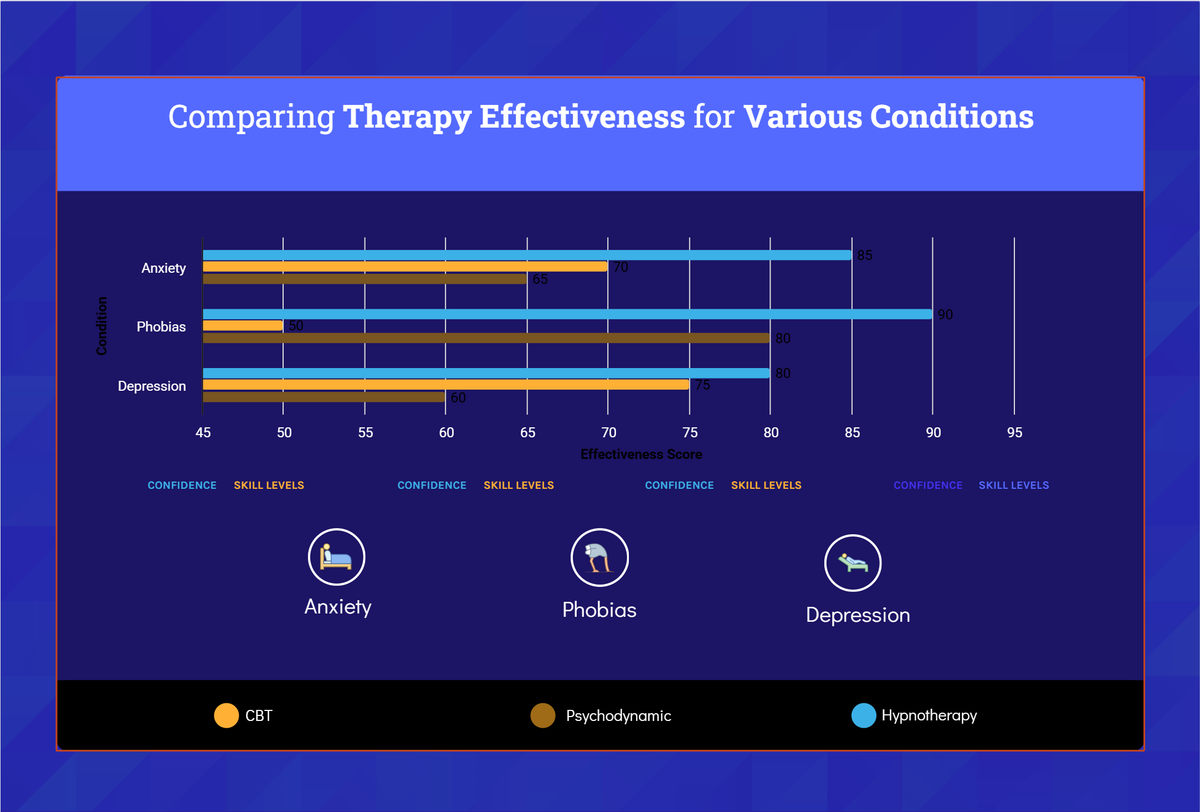
Hypnotherapy research has grown significantly over the past two decades, with mounting evidence supporting its effectiveness for specific conditions. Meta-analyses examining hypnotherapy outcomes show particularly strong results for pain management, with effect sizes often exceeding those found for traditional psychological interventions. Studies involving medical procedures, chronic pain conditions, and childbirth support consistently demonstrate significant benefits from hypnotic interventions.
Research on hypnotherapy for anxiety shows promising results, with several studies indicating that hypnotic approaches can produce rapid improvements that are maintained over time. The efficiency of hypnotherapy appears particularly pronounced for specific phobias and performance anxiety, where targeted interventions can address the automatic fear responses that drive these conditions.
Habit modification represents another area where hypnotherapy research shows strong outcomes. Studies examining hypnotic interventions for issues like nail-biting, hair-pulling, and various compulsive behaviors demonstrate success rates that often exceed those of conventional behavioral approaches, particularly when combined with self-hypnosis training.
Interestingly, research comparing hypnotherapy to traditional approaches for certain conditions suggests that combined approaches may offer optimal outcomes. Studies examining the integration of hypnotic techniques with cognitive-behavioral interventions often show enhanced effectiveness compared to either approach used alone.
The research landscape reveals that both modalities have distinct strengths depending on the presenting concern. Traditional therapy shows consistent effectiveness across a broad range of issues and provides reliable, gradual improvement for most clients. The extensive research base and standardized protocols make outcomes relatively predictable.
Hypnotherapy demonstrates particular strength for conditions involving automatic responses, physical symptoms with psychological components, and situations where rapid change is beneficial. However, the research base, while growing, remains smaller than that supporting traditional approaches, and outcomes may vary more significantly based on individual factors like hypnotic responsiveness.
It's worth noting that research in both fields increasingly emphasizes the importance of the therapeutic relationship and individual factors in determining outcomes. The most effective treatment appears to be one that matches the client's preferences, personality, and specific situation, regardless of the theoretical orientation.
Cost and Accessibility in Montreal
The financial landscape for therapeutic services in Montreal varies significantly between traditional therapy and hypnotherapy, with important implications for accessibility and long-term affordability. Understanding these differences can help individuals make informed decisions based on both their therapeutic needs and financial circumstances.
Traditional therapy costs in Montreal typically range from $80 to $200 per session for private practice, with registered psychologists generally commanding higher fees than other mental health professionals. However, several factors can significantly reduce these costs for Montreal residents. The provincial health insurance plan (RAMQ) covers psychological services in certain circumstances, particularly when provided through public health institutions or by physician-referred psychologists for specific conditions.

Many employers in Montreal offer Employee Assistance Programs (EAP) that provide free short-term counseling services, typically covering 3-8 sessions per issue per year. Extended health insurance plans commonly include mental health coverage, with annual maximums ranging from $500 to $2,500 depending on the plan. Some plans cover registered psychologists at higher rates than other practitioners, making it important to understand your specific coverage details.
Community resources also enhance accessibility to traditional therapy in Montreal. CLSCs (Centre local de services communautaires) provide free or low-cost mental health services, though waiting lists can be extensive. Various nonprofit organizations offer sliding-scale fee structures based on income, making services accessible to individuals with limited financial resources.
Hypnotherapy operates primarily as a private-pay service in Montreal, with session fees typically ranging from $100 to $250. In practice, most private insurance plans reimburse hypnotherapy when it is billed under naturopathy (naturopath) with official receipts; coverage amounts and annual maximums vary by plan. Always verify your benefits details and any reimbursement requirements.
The investment structure for hypnotherapy often differs from traditional therapy in terms of session frequency and duration. While traditional therapy typically involves weekly sessions over extended periods, hypnotherapy may involve fewer total sessions with potentially longer intervals between appointments. This difference can impact the overall financial commitment, with some clients finding hypnotherapy more cost-effective despite higher per-session fees.
Payment flexibility varies among practitioners, with some offering package deals for multiple sessions or payment plans that make services more accessible. The shorter treatment timelines often associated with hypnotherapy can make the total investment more predictable and manageable for some budgets.
Accessibility in terms of practitioner availability shows interesting patterns in Montreal. Traditional therapists are widely distributed throughout the metropolitan area, with concentrations in downtown Montreal, Westmount, and other central neighborhoods. However, demand often exceeds supply, particularly for therapists who accept insurance or offer reduced rates, leading to waiting lists that can extend several weeks or months.
Hypnotherapy practitioners are less numerous but often have more immediate availability. The growing interest in alternative approaches has led to increased numbers of certified practitioners throughout Montreal, including many who offer flexible scheduling options that may include evening or weekend appointments.
Language accessibility represents another important consideration in Montreal's bilingual environment. Traditional therapy services are widely available in both English and French, with many practitioners offering trilingual services to serve the city's diverse population. Hypnotherapy services are also available in multiple languages, though the pool of practitioners may be smaller for languages other than English and French.
Ready to explore what hypnosis can do for you?
Reserve a free 30-minute phone consultation and get your questions answered.
Which Approach Might Work Better for You?
Determining the most suitable therapeutic approach involves considering multiple personal factors that influence how you process information, engage with change, and respond to different types of interventions. Understanding your own preferences and characteristics can guide you toward the modality most likely to support your goals effectively.

Your learning and processing style plays a significant role in treatment compatibility. If you're someone who likes to understand the "why" behind your patterns, enjoys analyzing situations, and prefers to work through issues step by step, traditional therapy approaches may align well with your natural tendencies. These methods satisfy the analytical mind's need to understand connections between thoughts, feelings, and behaviors.
Alternatively, if you find that you already understand your patterns intellectually but struggle to change them, or if you tend to overthink situations in ways that create additional stress, hypnotherapy's direct approach to subconscious programming might prove more effective. Some individuals discover that their analytical mind actually interferes with change, making the hypnotic bypass of conscious resistance particularly valuable.
Consider your relationship with time and urgency regarding change. If you're comfortable with gradual progress and view therapy as a long-term investment in personal growth, traditional approaches offer the luxury of thorough exploration and skill development. This can be particularly valuable for complex interpersonal issues or deep-seated patterns that benefit from extended processing time.
However, if you're facing time-sensitive situations – such as preparing for a specific event, managing acute stress, or dealing with habits that need rapid modification – hypnotherapy's efficiency may better serve your needs. The accelerated timeline can be especially beneficial when external circumstances require quick adaptation.
Your comfort level with different states of consciousness is another crucial factor. Some individuals feel most secure when fully alert and in complete conscious control of the therapeutic process. For these individuals, traditional therapy's conscious engagement provides reassurance and allows them to feel actively involved in their healing journey.
Others find the relaxed, meditative state of hypnosis deeply appealing and naturally conducive to positive change. If you already practice meditation, yoga, or other mindfulness-based activities, you may find hypnotherapy feels familiar and comfortable.
The nature of your specific challenges also influences treatment selection. Issues rooted in trauma, complex relationship patterns, or conditions requiring extensive emotional processing often benefit from traditional therapy's thorough, conscious exploration. These approaches excel at helping individuals develop insight, communication skills, and long-term coping strategies.
Conditions involving automatic responses, habitual behaviors, physical symptoms with psychological components, or performance-related challenges often respond well to hypnotherapy's direct subconscious intervention. Phobias, habits, stress-related symptoms, and confidence issues frequently show rapid improvement with hypnotic approaches.
Increasingly, many individuals discover that combining approaches offers optimal results. You might begin with one modality and later incorporate the other, or work with practitioners who integrate both approaches within their practice. This flexibility allows you to benefit from the strengths of each method as your needs evolve.
When consulting with potential practitioners, consider asking about their experience with your specific concerns, their treatment philosophy, and their typical approaches to cases similar to yours. A skilled practitioner should be able to explain why they believe their approach would benefit you and should be open to discussing alternatives if their method doesn't seem to be the right fit.
Red flags in any therapeutic relationship include practitioners who guarantee specific outcomes, pressure you into extended treatment commitments, or seem dismissive of other approaches. Ethical practitioners acknowledge the value of different modalities and prioritize your wellbeing over their preferred treatment method.
Conclusion: Making an Informed Decision
The choice between hypnotherapy and traditional therapy isn't about finding the "right" or "wrong" approach – it's about identifying which methodology aligns best with your individual needs, preferences, and circumstances. Both modalities offer valuable pathways to healing and personal transformation, each with distinct advantages depending on your situation.
Traditional therapy provides the security of extensive research support, widespread availability, and often insurance coverage, making it an accessible choice for many Montreal residents. Its conscious, analytical approach satisfies those who prefer to understand their patterns thoroughly and develop explicit strategies for managing challenges.
Hypnotherapy offers the efficiency of direct subconscious work, often producing rapid changes that feel natural and sustainable. Its focus on accessing inner wisdom and transforming automatic patterns appeals to individuals seeking alternatives to purely analytical approaches.
The growing recognition that healing occurs through multiple pathways means you're not limited to a single choice. Many successful therapeutic journeys incorporate elements from different modalities, adapting the approach as needs evolve and circumstances change.
Your next step involves researching qualified practitioners in Montreal who demonstrate expertise, ethical practice, and genuine care for client wellbeing. Whether you choose traditional therapy, hypnotherapy, or a combination approach, the most important factor is finding a practitioner with whom you feel comfortable and confident.
Consider scheduling initial consultations with practitioners representing different approaches. These conversations can provide valuable insights into which methodology resonates most strongly with your goals and preferences, setting the foundation for a successful therapeutic relationship and meaningful positive change in your life.