Introduction: Understanding Hypnotherapy Coverage in Canadian Healthcare
Navigating insurance coverage for therapeutic hypnosis services in Canada can feel overwhelming, especially for Montreal residents seeking alternative wellness approaches. The landscape of hypnotherapy insurance coverage is complex, involving multiple layers of public healthcare limitations, private insurance variations, and provincial regulations that directly impact your access to these transformative services.
Currently, most provincial health insurance plans, including Quebec's RAMQ, do not cover hypnotherapy services as they fall outside traditional medical treatments. However, this doesn't mean you're without options. Many private insurance plans, extended health benefits, and Health Spending Accounts (HSAs) may provide partial or full coverage for sessions with qualified practitioners.
Understanding your coverage options is crucial for making informed decisions about your wellness journey. Whether you're seeking support for stress management, habit modification, or personal development, knowing how to navigate insurance requirements can significantly impact your access to therapeutic hypnosis services.
This comprehensive guide will walk you through the current insurance landscape in Montreal, helping you identify potential coverage sources, understand claim requirements, and explore alternative funding options when traditional insurance falls short. By the end of this article, you'll have the knowledge needed to make confident decisions about accessing hypnotherapy services while maximizing your available benefits.
The Current State of Canadian Healthcare and Alternative Therapies
Canada's healthcare system, built on universal access to medically necessary services, traditionally focuses on conventional medical treatments covered under provincial health insurance plans. This framework presents unique challenges for alternative and complementary therapies, including therapeutic hypnosis, which often fall into a gray area between wellness services and medical treatment.
The Canada Health Act governs publicly funded healthcare but doesn't mandate coverage for alternative therapies. This creates a patchwork system where coverage varies significantly between provinces and territories. While medically necessary services receive full coverage, therapeutic services that promote wellness or address behavioral patterns typically require private funding or insurance supplementation.
Provincial health authorities increasingly recognize the value of complementary approaches to wellness, yet formal integration into public healthcare remains limited. However, several provinces have begun pilot programs exploring alternative therapy coverage, particularly for mental health support and chronic condition management. These initiatives suggest growing awareness of holistic approaches to health and wellness.
Quebec occupies a unique position in this landscape due to its distinct healthcare administration and regulatory framework. The province has shown progressive attitudes toward certain alternative therapies, though therapeutic hypnosis specifically remains outside standard RAMQ coverage. Quebec's regulatory environment for complementary health practitioners also differs from other provinces, affecting how services are categorized and potentially covered by insurance.
Recent trends indicate increasing private insurance coverage for mental health and wellness services. Many insurance providers now offer expanded benefits for psychological services, stress management programs, and behavioral modification support. This shift reflects growing recognition that preventive and supportive care can reduce long-term healthcare costs while improving quality of life.
The integration of alternative therapies into mainstream healthcare continues evolving. Professional associations, practitioners, and advocacy groups work toward establishing clearer standards and pathways for coverage. This ongoing dialogue between healthcare providers, insurance companies, and regulatory bodies shapes the future landscape for therapeutic hypnosis coverage in Canada.
Research supporting the effectiveness of hypnotherapy for various concerns continues growing, potentially influencing future coverage decisions. Studies demonstrating positive outcomes for anxiety management, habit modification, and stress reduction provide evidence that may eventually support broader insurance recognition and coverage expansion.
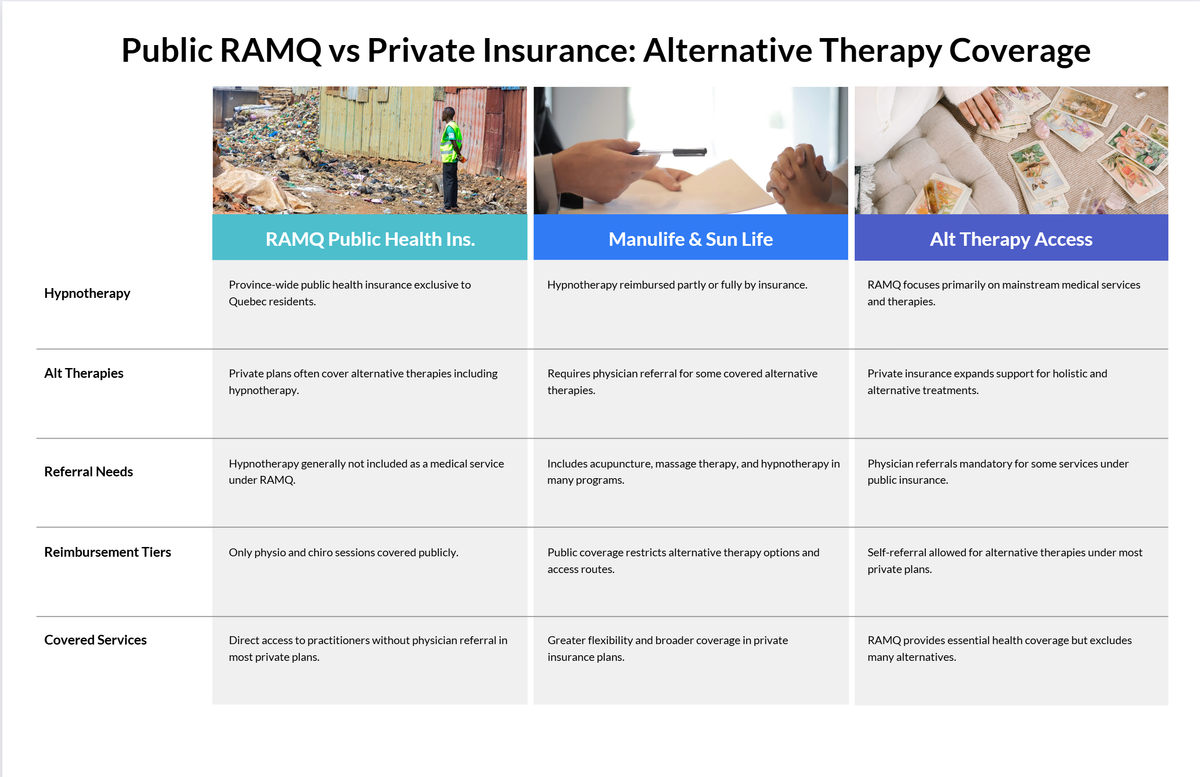
Insurance Coverage Types: Public vs. Private Options
Understanding the distinction between public healthcare coverage and private insurance options is fundamental for Montreal residents seeking hypnotherapy services. Quebec's public health insurance, RAMQ (Régie de l'assurance maladie du Québec), covers medically necessary services but excludes most alternative therapies, including therapeutic hypnosis. This limitation means individuals must explore private insurance avenues for potential coverage.
Private insurance plans offer the most promising pathway for hypnotherapy coverage. These plans typically fall into several categories: individual health insurance policies, group insurance through employers, and supplementary health insurance designed to fill gaps in public coverage. Each type operates under different terms, coverage limits, and claim requirements that directly impact your access to therapeutic hypnosis services.
Employee benefit packages represent a significant coverage opportunity for many Montreal residents. Comprehensive group insurance plans often include extended health benefits covering various therapeutic services. These benefits may encompass sessions with qualified practitioners under categories such as "psychological services," "mental health support," or "complementary health therapies." The key lies in understanding how your specific plan categorizes and limits such services.
Group insurance plans typically offer more generous coverage than individual policies due to risk pooling and employer negotiations. Many Montreal employers provide health spending accounts or flexible benefit packages allowing employees to allocate funds toward services they value most, including therapeutic hypnosis sessions.
Health Spending Accounts (HSAs) provide another valuable coverage mechanism. These accounts allow individuals to set aside pre-tax dollars for qualifying health expenses, including many alternative therapies. While HSAs don't provide direct insurance coverage, they offer tax advantages that effectively reduce the cost of hypnotherapy services when provided by qualified practitioners.
Flexible Spending Accounts through employers operate similarly to HSAs but with different contribution limits and rollover rules. These accounts can significantly reduce out-of-pocket costs for therapeutic services while providing tax benefits that make sessions more affordable.
Private supplementary insurance policies specifically designed to complement public healthcare coverage may include provisions for alternative therapies. These policies often focus on services not covered by provincial health plans, making them potentially valuable for accessing hypnotherapy services. However, coverage terms vary significantly between providers and policies.
Critical factors affecting private insurance coverage include practitioner qualifications, medical referral requirements, and pre-authorization processes. Insurance companies increasingly require services to be provided by certified professionals meeting specific educational and certification standards to qualify for coverage benefits.

Montreal-Specific Insurance Landscape
Montreal's insurance marketplace reflects Quebec's unique regulatory environment and cultural approach to healthcare, creating distinct opportunities and challenges for hypnotherapy coverage. Major insurance providers operating in the Montreal market include Desjardins Insurance, Industrial Alliance, SSQ Insurance, Great-West Life, Manulife, and Sun Life Financial, each offering different approaches to alternative therapy coverage.
Desjardins Insurance, as Quebec's largest financial cooperative, provides extensive group and individual insurance options for Montreal residents. Their health insurance plans often include complementary therapy benefits, though specific coverage for hypnotherapy depends on plan type and practitioner qualifications. Desjardins has shown progressive attitudes toward mental health and wellness services, potentially benefiting those seeking therapeutic hypnosis support.
Industrial Alliance, headquartered in Quebec City, maintains a strong Montreal presence with insurance products tailored to Quebec's regulatory framework. Their group insurance plans frequently include extended health benefits covering various therapeutic services, with coverage often determined by practitioner credentials and medical necessity documentation.
SSQ Insurance, another Quebec-based provider, offers comprehensive health insurance plans with varying degrees of alternative therapy coverage. Their approach to complementary health services reflects understanding of Quebec's healthcare landscape and cultural preferences for holistic wellness approaches.
National insurance companies like Great-West Life, Manulife, and Sun Life Financial operate significant Montreal offices, providing both individual and group insurance options. These companies often offer more standardized coverage across Canada while adapting to Quebec's specific regulatory requirements and market preferences.
The Montreal insurance landscape also includes smaller regional providers and specialized health insurance companies focusing on complementary and alternative therapies. These niche providers may offer more comprehensive coverage for therapeutic hypnosis services, though their market presence remains limited compared to major insurers.
Quebec's regulatory environment affects how insurance companies structure their coverage for alternative therapies. The province's approach to professional regulation and healthcare delivery influences insurer policies regarding practitioner qualifications, service categorization, and claim approval processes.
Regional variations within Quebec can affect coverage availability and terms. Montreal's status as a major urban center generally provides residents with more insurance options and potentially more favorable coverage terms compared to rural areas. The concentration of qualified practitioners in Montreal also supports better insurance recognition and coverage opportunities.
Corporate insurance programs in Montreal often reflect the city's diverse economy and significant presence of multinational corporations. Many large employers provide comprehensive benefit packages including extensive health spending accounts or flexible benefits that can cover hypnotherapy services, making employment-based coverage a valuable option for many residents.

What Insurance Companies Look For in Hypnotherapy Claims
Insurance companies evaluate hypnotherapy claims based on specific criteria designed to ensure services meet professional standards and provide legitimate therapeutic value. Understanding these requirements is essential for successfully navigating the claims process and maximizing your coverage benefits. The evaluation process typically begins with practitioner qualifications and certification requirements.
Certified practitioners meeting recognized professional standards have significantly better success rates with insurance claims. Insurance companies typically require practitioners to hold certifications from established organizations such as the International Federation of Holistic Education and Certification (IFHEC) or recognition from professional associations like the National Association of Naturopaths. These credentials demonstrate adherence to professional standards and ethical practices that insurance companies value.
Educational background plays a crucial role in claim approval. Insurance companies often require practitioners to have completed comprehensive training programs including theoretical foundations, practical application, and supervised practice hours. Master practitioner certifications carry additional weight due to their advanced training requirements and demonstrated expertise levels.
Medical referral requirements vary significantly between insurance providers and plan types. Some insurers require referrals from licensed medical professionals, particularly for claims related to stress management, anxiety support, or behavioral modification. These referrals help establish medical necessity and create documentation trails supporting claim validity.
However, many insurance plans now recognize qualified practitioners' ability to provide services without medical referrals, particularly for wellness and personal development applications. This shift reflects growing acceptance of alternative therapies as legitimate healthcare services worthy of insurance coverage.
Documentation requirements form the backbone of successful insurance claims. Insurance companies typically require detailed session notes, treatment plans, and progress reports demonstrating the therapeutic value and professional nature of services provided. Proper documentation should include session objectives, techniques used, client responses, and planned follow-up care.
Receipt requirements extend beyond simple payment documentation. Insurance companies often require receipts containing specific information including practitioner credentials, service dates, session types, and detailed service descriptions. Generic receipts may result in claim denials, making proper documentation essential for coverage success.
Pre-authorization processes, while not always required, can significantly improve claim approval rates. Contacting your insurance provider before beginning sessions allows you to understand specific coverage terms, documentation requirements, and any limitations affecting your benefits. This proactive approach prevents surprises and ensures compliance with insurer requirements.
Some insurance companies require periodic progress reports or treatment updates for ongoing coverage approval. These reports help insurers evaluate treatment effectiveness and determine continued coverage eligibility, making regular communication between practitioners and insurance providers beneficial for sustained coverage access.

Maximizing Your Therapy Benefits: A Practical Guide
Successfully maximizing your hypnotherapy insurance benefits requires strategic planning, thorough research, and proactive communication with both your insurance provider and chosen practitioner. The first step involves conducting a comprehensive review of your current coverage options, including employment benefits, private insurance policies, and health spending accounts.
Start by examining your employee benefits package thoroughly. Contact your human resources department or benefits administrator to request detailed information about mental health coverage, complementary therapy benefits, and health spending account options. Many employees underutilize available benefits simply because they're unaware of their coverage scope.
When reviewing your benefits documentation, look for categories such as "mental health services," "complementary therapies," "wellness programs," or "alternative medicine coverage." These categories may include hypnotherapy services even if not explicitly mentioned. Pay attention to annual coverage limits, per-session maximums, and any percentage-based cost-sharing requirements.
Essential questions to ask your insurance provider include: What practitioner qualifications are required for coverage? Do you require medical referrals for hypnotherapy services? What documentation is needed for successful claims? Are there pre-authorization requirements? What are the annual coverage limits and per-session maximums? Understanding these details prevents claim denials and maximizes your benefits utilization.
Working with certified master practitioners significantly improves your coverage success rates. Qualified practitioners understand insurance requirements and can provide appropriate documentation supporting your claims. When selecting a practitioner, verify their certifications meet your insurance company's standards and ask about their experience with insurance claims processes.
Establish clear communication with your chosen practitioner about insurance requirements from the beginning. Discuss documentation needs, receipt formats, and any specific reporting requirements your insurance company mandates. Experienced practitioners often provide guidance on maximizing insurance benefits and avoiding common claim pitfalls.
Maintain detailed records of all interactions with your insurance company, including phone calls, emails, and written correspondence. Document claim submissions, approval letters, and any denial explanations. This information proves invaluable if disputes arise or appeals become necessary.
Consider timing your sessions strategically to maximize annual benefits. If you have generous coverage limits, spacing sessions throughout the benefit year ensures continuous access to services. For limited coverage, concentrating sessions during specific periods might provide more intensive support when most needed.
Keep all receipts, session notes, and related documentation organized and easily accessible. Insurance companies may request additional information or clarification, making organized record-keeping essential for smooth claims processing. Consider creating digital copies as backup documentation.
See how hypnosis can support your goals
Book a free 30-minute phone consultation to get personalized guidance.
Alternative Payment Options When Insurance Doesn't Cover
When insurance coverage proves insufficient or unavailable, several alternative payment strategies can make hypnotherapy services more accessible and affordable. Understanding these options ensures you can access the support you need regardless of insurance limitations or coverage gaps.
Payment plans offer immediate relief for those facing financial constraints while seeking therapeutic support. Many qualified practitioners recognize the importance of making services accessible and offer flexible payment arrangements. These plans typically allow you to spread session costs over several months, making individual sessions more manageable within your budget constraints.
When discussing payment plans with practitioners, be transparent about your financial situation and coverage limitations. Experienced practitioners often work with clients to create sustainable payment arrangements that support your wellness goals while respecting your financial boundaries. Some practitioners offer sliding scale fees based on income or special circumstances.
Tax deductions for medical expenses provide another avenue for offsetting hypnotherapy costs. Under Canadian tax law, therapeutic services provided by qualified practitioners may qualify as medical expenses eligible for tax credits. Keep detailed records of all payments, receipts, and practitioner credentials to support your tax claims.
The medical expense tax credit allows you to claim qualifying expenses exceeding either $2,397 or 3% of your net income, whichever is less. While this doesn't provide immediate cost relief, it can result in significant tax savings that help offset your therapeutic investment over time.
Corporate wellness programs represent an emerging opportunity for accessing subsidized hypnotherapy services. Many Montreal employers recognize the value of supporting employee mental health and wellness, leading to innovative benefit programs that may include coverage for alternative therapies.
Some companies partner with wellness providers to offer on-site services or preferred provider arrangements that reduce costs for employees. Others provide wellness spending accounts or flexible benefits specifically designed to support diverse wellness needs. Inquire with your employer about existing or planned wellness initiatives that might include hypnotherapy support.
Community health initiatives and non-profit organizations occasionally offer subsidized or low-cost access to alternative therapies. Montreal's diverse healthcare landscape includes various community organizations focused on mental health, wellness, and holistic healing approaches that may provide affordable access to therapeutic services.
Research community health centers, wellness cooperatives, and non-profit organizations in Montreal that focus on mental health and wellness support. Some organizations offer sliding scale services, group sessions, or special programs designed to increase access to alternative therapies for individuals with financial constraints.
Professional training programs sometimes offer reduced-cost services provided by advanced students under qualified supervision. While these services may not offer the same level of experience as master practitioners, they can provide valuable support at significantly reduced costs for those with limited financial resources.

Ready to explore what hypnosis can do for you?
Reserve a free 30-minute phone consultation and get your questions answered.
The Future of Hypnotherapy Insurance Coverage in Canada
The landscape of hypnotherapy insurance coverage in Canada continues evolving as healthcare systems increasingly recognize the value of integrative and complementary approaches to wellness. Several emerging trends suggest expanding coverage opportunities for therapeutic hypnosis services in the coming years.
Growing research evidence supporting hypnotherapy effectiveness for various concerns including anxiety management, stress reduction, habit modification, and pain management strengthens the case for insurance coverage expansion. As more peer-reviewed studies demonstrate positive outcomes and cost-effectiveness compared to traditional interventions, insurance companies show increasing willingness to cover these services.
Professional standardization efforts across Canada work toward establishing consistent qualification requirements and practice standards for hypnotherapy practitioners. These initiatives aim to create clearer pathways for insurance recognition while ensuring public safety and service quality. Organizations like the Canadian Hypnosis Institute and provincial regulatory bodies actively participate in these standardization efforts.
Mental health awareness campaigns and policy initiatives at federal and provincial levels increasingly emphasize comprehensive approaches to wellness support. This broader perspective on mental health creates opportunities for alternative therapies to gain recognition within mainstream healthcare frameworks, potentially leading to expanded coverage options.
Quebec's unique healthcare landscape positions the province to potentially lead in alternative therapy coverage expansion. The province's history of healthcare innovation and cultural openness to holistic approaches suggest possibilities for pilot programs or coverage expansions that could serve as models for other Canadian provinces.
Insurance industry competition drives innovation in coverage offerings, with companies seeking to differentiate themselves through comprehensive benefits packages. As consumer demand for alternative therapy coverage grows, insurance providers increasingly include these services to attract and retain customers, particularly in competitive markets like Montreal.
Technology integration in healthcare delivery creates new opportunities for expanding access to hypnotherapy services. Online sessions, digital wellness platforms, and telehealth initiatives may reduce service delivery costs while increasing accessibility, potentially making coverage more attractive to insurance providers.
Advocacy efforts by professional associations, practitioners, and patients continue pushing for expanded recognition and coverage of alternative therapies. These collaborative efforts work toward policy changes, regulatory improvements, and insurance industry engagement that supports broader access to hypnotherapy services.
For Montreal residents, these trends suggest gradually improving access to insured hypnotherapy services. While immediate comprehensive coverage remains unlikely, incremental improvements in recognition, coverage options, and accessibility appear probable over the next several years as the healthcare landscape continues evolving toward more integrative approaches.

Conclusion: Making Informed Decisions About Your Therapeutic Hypnosis Journey
Navigating hypnotherapy insurance coverage in Montreal requires patience, research, and strategic planning, but the effort invested in understanding your options can significantly impact your access to transformative therapeutic services. While Quebec's public healthcare system doesn't cover hypnotherapy, numerous private insurance pathways, alternative payment options, and emerging coverage trends provide hope for accessing the support you seek.
The key to success lies in thoroughly investigating your current benefits, asking specific questions about coverage requirements, and working with qualified practitioners who understand insurance processes. Remember that coverage landscapes continue evolving, with increasing recognition of alternative therapies' value in comprehensive wellness approaches.
Whether you're dealing with stress, seeking personal transformation, or addressing specific concerns, don't let insurance uncertainties prevent you from exploring therapeutic hypnosis options. With proper planning and understanding of available resources, you can find pathways to access these valuable services while maximizing your available benefits and minimizing out-of-pocket costs.
Your wellness journey deserves investment and support. Take the first step by reviewing your coverage options, consulting with qualified practitioners, and exploring the various pathways outlined in this guide to make therapeutic hypnosis an accessible part of your personal development and wellness strategy.