Introduction
Picture this: someone mentions hypnotherapy, and your mind immediately conjures images of swinging pocket watches, mysterious stage performers, and people clucking like chickens. These dramatic portrayals have created widespread misconceptions about what hypnotherapy actually is and how it works. The reality is far different from these theatrical displays.
Hypnotherapy is a legitimate, science-backed approach that helps people access their subconscious mind to create positive changes in their lives. Unlike stage hypnosis designed for entertainment, therapeutic hypnosis focuses on healing, personal growth, and overcoming life's challenges.
In this comprehensive guide, you'll discover the truth about what hypnotherapy really involves, examine the scientific evidence supporting its effectiveness, and learn how it can address various concerns from anxiety and stress to habits and phobias. We'll separate fact from fiction, explore what actually happens during a session, and help you understand whether this approach might be right for you.
As a certified master practitioner through the IFHEC Institut de Formation en Hypnose et en Coaching and member of the National Association of Naturopaths, I've witnessed firsthand how hypnotherapy can create meaningful transformations in people's lives. My goal is to provide you with accurate, evidence-based information so you can make an informed decision about this powerful tool for personal change.
Understanding What Is Hypnotherapy
What exactly is hypnotherapy? At its core, hypnotherapy is a collaborative process that uses guided relaxation and focused attention to help you access your subconscious mind. Think of it as a bridge between your conscious thoughts and the deeper patterns that influence your behavior, emotions, and beliefs.
During hypnotherapy, you enter a naturally occurring state of heightened focus and relaxation. This isn't sleep or unconsciousness – rather, it's similar to the feeling you experience when you're completely absorbed in a good book or lost in thought during a peaceful walk. In this relaxed state, your mind becomes more open to positive suggestions and new perspectives.
The key difference between hypnosis and hypnotherapy lies in their purpose and application. Hypnosis refers to the altered state of consciousness itself – that focused, relaxed awareness we naturally experience. Hypnotherapy, however, is the therapeutic application of this state to address specific goals and challenges. It's hypnosis with intention and structure, guided by someone trained in therapeutic techniques.
Historically, hypnotic states have been recognized for thousands of years. Ancient civilizations used similar techniques in healing rituals and spiritual practices. Modern hypnotherapy began taking shape in the 18th century through the work of Franz Mesmer, though it was James Braid who first coined the term "hypnosis" in the 1840s. The field gained scientific credibility through researchers like Milton Erickson, whose innovative approaches in the mid-20th century helped establish hypnotherapy as a respected therapeutic tool.
Today's hypnotherapy applications are vast and evidence-based. People use it to manage stress and anxiety, change unwanted habits, improve sleep, address fears, support weight management goals, and enhance performance in various areas of life. Modern practitioners combine traditional hypnotic techniques with contemporary understanding of psychology and neuroscience.
Stage hypnosis and therapeutic hypnosis are entirely different practices. Stage hypnosis focuses on entertainment, selecting highly suggestible volunteers who are willing to perform amusing acts for an audience. The stage hypnotist looks for people who are naturally extroverted and comfortable being the center of attention.
Therapeutic hypnosis, conversely, is a private, safe environment focused entirely on your wellbeing and goals. There's no performance aspect, no loss of control, and no embarrassment. You remain aware of your surroundings and can emerge from the hypnotic state whenever you choose. The suggestions given are always aligned with your values and desired outcomes.

Understanding these distinctions helps clarify what hypnotherapy actually involves. It's not about mind control or manipulation – it's about accessing your inner resources and natural ability to create positive change. The hypnotherapist serves as a skilled guide, helping you navigate into a relaxed state where your subconscious mind becomes more receptive to beneficial suggestions and new patterns of thinking.
This collaborative approach respects your autonomy while providing the structure and expertise needed to facilitate meaningful change. Whether you're seeking to address specific challenges or simply explore personal growth, hypnotherapy offers a gentle yet powerful pathway to transformation.
Ready to explore how therapeutic hypnosis can help you?
Reserve a free 30-minute phone consultation and get your questions answered.
The Science Behind Hypnotherapy
Modern neuroscience has revealed fascinating insights into what actually happens in your brain during hypnosis. When you enter a hypnotic state, several distinct changes occur in neural activity that make therapeutic change possible.
Brain imaging studies using fMRI and EEG technology show that hypnosis creates measurable alterations in brain wave patterns. The normally busy chatter of beta waves (associated with active thinking) gives way to alpha and theta waves – the same patterns present during deep relaxation and meditation. These slower brain waves indicate a shift from analytical thinking to a more receptive, focused state.

The anterior cingulate cortex, responsible for attention and emotional regulation, becomes more active during hypnosis. Meanwhile, the dorsolateral prefrontal cortex, which houses our critical, analytical thinking, shows decreased activity. This neurological shift explains why people become more open to new ideas and less likely to immediately reject suggestions during hypnotic states.
The conscious versus subconscious mind represents one of the most important concepts in understanding hypnotherapy's effectiveness. Your conscious mind processes about 40 bits of information per second, while your subconscious mind handles approximately 11 million bits per second. The subconscious stores your automatic behaviors, emotional responses, beliefs, and memories.
During normal waking consciousness, your critical faculty – essentially a mental gatekeeper – filters incoming information against existing beliefs and patterns. If a suggestion conflicts with established patterns, the conscious mind typically rejects it. Hypnosis temporarily relaxes this critical faculty, allowing beneficial suggestions to reach the subconscious mind more directly.
This doesn't mean you become gullible or lose control. Your subconscious mind still maintains its protective functions and won't accept suggestions that conflict with your core values or well-being. However, it becomes more willing to consider new possibilities and alternative patterns of response.
Current research continues to validate hypnotherapy's effectiveness across multiple conditions. A comprehensive meta-analysis published in the International Journal of Clinical and Experimental Hypnosis found significant positive effects for hypnotherapy in treating anxiety, pain, and various psychological conditions. The research shows effect sizes comparable to or exceeding many conventional therapeutic approaches.
Stanford University's research on hypnotic susceptibility has identified specific brain connectivity patterns that predict who responds well to hypnosis. Their studies reveal that people with stronger connections between the executive attention network and the salience network tend to be more hypnotically responsive.
Neuroplasticity – your brain's ability to form new neural pathways – provides the biological foundation for lasting change through hypnotherapy. When you repeatedly practice new thought patterns or responses in the receptive hypnotic state, you literally rewire your brain. These new neural pathways can become stronger than old, unwanted patterns through consistent reinforcement.
The Default Mode Network (DMN), active when your mind wanders or engages in self-referential thinking, also shows interesting changes during hypnosis. Reduced DMN activity correlates with decreased rumination and worry – explaining why many people experience relief from anxiety and overthinking through hypnotherapy.
Research on the neurotransmitter systems reveals that hypnosis can influence the release of endorphins, serotonin, and GABA – chemicals associated with relaxation, mood regulation, and pain relief. This biochemical response helps explain the wide range of benefits people experience from hypnotherapy sessions.
These scientific findings demonstrate that hypnotherapy isn't placebo effect or wishful thinking. It represents a measurable, neurologically-based intervention that can facilitate genuine therapeutic change by working with your brain's natural capacity for adaptation and healing.
Does Hypnotherapy Work? Examining the Evidence

The question of hypnotherapy effectiveness has been extensively studied, and the research presents compelling evidence for its benefits across numerous conditions. However, understanding the nuances of this research helps set realistic expectations about what hypnotherapy can and cannot accomplish.
Clinical studies demonstrate significant positive outcomes for hypnotherapy across diverse applications. A landmark meta-analysis examining 18 studies on hypnosis for anxiety found an average effect size of 0.79 – considered large in clinical research terms. This means hypnotherapy showed substantial improvement compared to control groups receiving no treatment or alternative interventions.
For pain management, the evidence is particularly robust. The International Association for the Study of Pain recognizes hypnosis as an effective treatment for chronic pain conditions. Studies involving cancer patients, individuals with fibromyalgia, and those experiencing post-surgical pain consistently show that hypnotherapy can reduce pain intensity and improve quality of life.
Research on habit change reveals impressive outcomes as well. Studies examining smoking cessation show success rates ranging from 20% to 45% for hypnotherapy – comparable to or better than many conventional approaches. The key difference is often the duration of follow-up and the definition of "success" used in each study.
Success rates vary significantly depending on several factors. The condition being addressed plays a crucial role in outcomes. Issues involving learned behaviors, stress responses, and subjective experiences tend to respond particularly well to hypnotherapy. Conditions with strong physiological components may show improvement in symptom management and coping, though they may require additional medical support.
Individual factors heavily influence success rates. People who are more naturally relaxed, open to new experiences, and motivated to change typically see better outcomes. However, hypnotic responsiveness isn't fixed – it can be developed through practice and proper guidance.
The practitioner's skill and experience significantly impact results. Certified professionals who combine hypnosis with solid understanding of psychology and behavior change tend to achieve better outcomes than those with minimal training.
Several factors influence treatment outcomes beyond the basic technique itself. The therapeutic relationship between client and practitioner creates the foundation for successful work. Trust, rapport, and clear communication about goals and expectations contribute significantly to positive results.
Client readiness for change represents another crucial variable. Hypnotherapy works best when someone genuinely wants to make changes rather than feeling pressured by external circumstances. The techniques can enhance motivation, but they work most effectively when some internal desire for change already exists.
Session frequency and duration affect outcomes as well. Most conditions benefit from multiple sessions spaced over several weeks. Single-session approaches may provide temporary relief but rarely create lasting transformation for complex issues.
Realistic expectations are essential for understanding hypnotherapy's role in personal change. While the research shows significant benefits, hypnotherapy isn't magic. It doesn't instantly erase years of ingrained patterns or replace the need for practical action in your daily life.
The most honest assessment is that hypnotherapy serves as a powerful tool that can accelerate and support change processes. It can help you access inner resources, reduce resistance to beneficial changes, and reinforce new patterns of thinking and behavior. However, it works best when combined with conscious effort and commitment to implementing changes in your daily life.
Some conditions may require longer-term work or integration with other approaches. Complex trauma, severe addiction, or long-standing behavioral patterns might need comprehensive treatment plans rather than hypnotherapy alone.
The research also indicates that people who practice self-hypnosis between sessions often experience better outcomes. This suggests that hypnotherapy's benefits extend beyond the practitioner's office into your ongoing relationship with your own mind and inner resources.
Understanding these evidence-based perspectives helps you approach hypnotherapy with informed optimism – recognizing its significant potential while maintaining realistic expectations about the change process.
Common Applications and Hypnosis Benefits
Hypnotherapy's versatility makes it valuable for addressing a wide range of life challenges. Understanding these applications can help you recognize whether this approach might benefit your specific situation.
Anxiety and stress management represent some of the most common reasons people seek hypnotherapy. The relaxation response naturally induced during hypnotic states helps counteract chronic stress activation. Many clients report feeling calmer after just one session, though lasting change typically develops over multiple sessions.
The techniques help you develop new responses to stress triggers. Instead of automatically reacting with tension and worry, you can learn to pause, breathe, and respond from a more centered place. This isn't about eliminating all stress – which would be unrealistic – but rather developing healthier ways of managing life's inevitable challenges.
For anxiety specifically, hypnotherapy can address both the physical symptoms (rapid heartbeat, shallow breathing, muscle tension) and the mental patterns (catastrophic thinking, excessive worry, anticipatory anxiety). The subconscious mind learns new associations with previously anxiety-provoking situations.
Habit change and addiction support utilize hypnotherapy's ability to work with automatic behavioral patterns. Smoking cessation represents one of the most researched applications, with many people reporting success after comprehensive hypnotherapy programs.
The approach doesn't rely on willpower alone – instead, it helps reprogram the subconscious associations that drive unwanted habits. For smoking, this might involve changing the mental connections between cigarettes and relaxation, social connection, or stress relief.
Other habits that respond well to hypnotherapy include nail biting, excessive social media use, procrastination patterns, and various compulsive behaviors. The key is addressing both the conscious desire to change and the subconscious patterns that maintain the unwanted behavior.
Weight management support focuses on the psychological and emotional aspects of eating patterns rather than just dietary restrictions. Many people struggle with weight not because they lack nutritional knowledge, but because eating serves emotional needs or operates through automatic patterns.
Hypnotherapy can help you develop a healthier relationship with food, enhance motivation for physical activity, and address emotional eating triggers. It's particularly useful for people who've experienced repeated cycles of weight loss and regain, as it addresses the subconscious patterns that often sabotage conscious efforts.
The approach emphasizes sustainable lifestyle changes rather than quick fixes, helping you align your subconscious mind with your conscious health goals.
Pain management applications draw on hypnotherapy's ability to influence pain perception and promote relaxation. While it doesn't cure underlying medical conditions, it can significantly improve quality of life for people dealing with chronic pain.
The techniques help you develop new relationships with pain sensations – learning to relax around discomfort rather than tensing against it. Many people discover that their pain becomes more manageable when they're not fighting it constantly.
Hypnotherapy for pain also addresses the emotional aspects of chronic conditions, helping reduce the anxiety, frustration, and depression that often accompany persistent physical discomfort.
Sleep improvement benefits from hypnotherapy's natural promotion of relaxation and mental quieting. Many people struggle with sleep because their minds remain active with worries, plans, and mental chatter when they try to rest.
The techniques teach your mind how to shift into a more peaceful state conducive to sleep. This includes learning to release the day's concerns, quiet mental activity, and trust your body's natural sleep processes.
Sleep hypnosis often includes suggestions for staying asleep through the night and waking feeling refreshed and restored.

Phobia treatment represents one of hypnotherapy's most dramatic applications. Phobias involve intense subconscious fear responses that often seem irrational to the conscious mind. Traditional approaches that rely purely on logic often struggle with these deep-seated fears.
Hypnotherapy can help you gradually reprogram your subconscious response to phobic triggers. The process typically involves learning deep relaxation first, then gradually and safely encountering the feared situation in your imagination while maintaining that relaxed state.
Performance enhancement applications help people excel in sports, public speaking, creative endeavors, and professional situations. The techniques address performance anxiety while also helping you access states of focused concentration and confidence.
Athletes use hypnotherapy to improve focus, enhance motivation, and develop mental rehearsal skills. Public speakers learn to transform nervousness into positive energy and maintain composure under pressure.
These diverse applications share common elements: they all work with your subconscious patterns, promote relaxation and focus, and help align your deeper mind with your conscious goals. The specific techniques may vary, but the underlying principles remain consistent across different challenges and aspirations.
What to Expect During a Hypnotherapy Session
Understanding what actually happens during a hypnotherapy session helps demystify the process and allows you to approach your first experience with confidence rather than uncertainty.
The initial consultation process typically begins before any hypnotic work takes place. This conversation allows your practitioner to understand your specific goals, concerns, and personal history relevant to the changes you want to make. You'll discuss what brought you to hypnotherapy, what you've tried before, and what success would look like for you.
This initial discussion also covers any questions or concerns you might have about hypnosis itself. Many people benefit from understanding exactly what will happen and having their misconceptions addressed before beginning the actual hypnotic work.
Your practitioner will likely explain their approach and may discuss the number of sessions that might be beneficial for your particular situation. This isn't about pressuring you into multiple appointments, but rather helping you understand realistic timelines for the changes you're seeking.
A typical session structure usually follows a predictable pattern, though individual practitioners may have their own variations. Most sessions begin with a brief check-in about how you've been since the last appointment and any experiences you've noticed related to your goals.
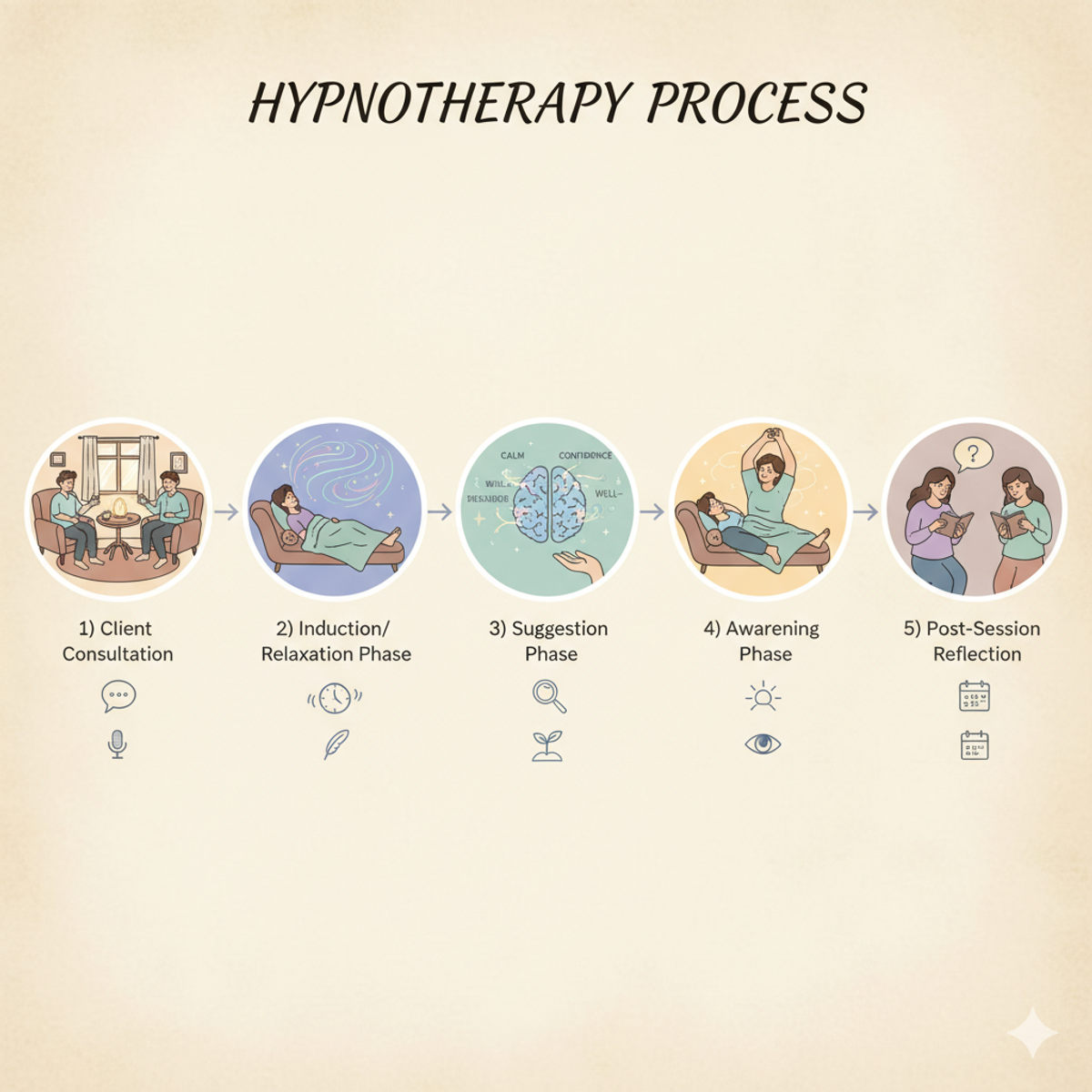
The hypnotic portion typically starts with relaxation techniques designed to help you settle into a comfortable, focused state. This might involve progressive muscle relaxation, breathing techniques, or guided imagery that helps quiet your conscious mind.
Once you've reached an appropriately relaxed state, your practitioner will offer suggestions and techniques specifically tailored to your goals. These might include direct suggestions for new behaviors, imagery exercises that help you rehearse positive changes, or techniques for accessing your own inner wisdom and resources.
The session usually concludes with suggestions for alertness and well-being as you return to normal waking consciousness. Many practitioners end with brief discussion about your experience and any insights that emerged during the session.
What hypnosis actually feels like varies from person to person, but most people describe it as deeply relaxing and pleasant. You might feel similar to the moments just before falling asleep – aware of your surroundings but not particularly concerned with them, focused inward rather than on external distractions.
Some people experience a floating sensation or feel very heavy and relaxed. Others report that time seems to pass differently – a 30-minute session might feel like 10 minutes or an hour. You may find that your mind wanders occasionally, which is perfectly normal and doesn't interfere with the process.
Throughout the experience, you remain aware of what's happening. You can hear your practitioner's voice and generally remember the suggestions given, though some details might feel dreamlike afterward. Importantly, you retain the ability to move, speak, or emerge from the hypnotic state if needed.
Your role as an active participant is crucial for successful outcomes. Hypnotherapy isn't something done to you – it's a collaborative process where your cooperation and engagement enhance the effectiveness of the techniques.
This means following the relaxation instructions, allowing yourself to imagine the scenarios suggested, and being open to the new perspectives offered during the session. It also means being honest about your experience and communicating with your practitioner about what works well for you.
Between sessions, you play an active role by practicing any self-hypnosis techniques taught, implementing suggested changes in your daily life, and paying attention to shifts in your thoughts, feelings, or behaviors.
Many people find that hypnotherapy sessions create a sense of empowerment as they discover their own capacity for relaxation, focus, and positive change. Rather than feeling like passive recipients of treatment, they experience themselves as active participants in their own transformation.
The overall experience tends to be gentle, respectful, and focused entirely on your well-being and goals. Most people leave sessions feeling relaxed, hopeful, and more connected to their own inner resources for creating positive change.
Myths vs. Reality About Hypnotherapy
Despite growing scientific validation, hypnotherapy continues to be surrounded by misconceptions that prevent many people from exploring its benefits. Let's address these myths with factual information.
The mind control myth represents perhaps the most persistent misconception about hypnosis. Popular media portrays hypnotists as having mysterious powers to control others' minds and force them to act against their will. This dramatic fiction bears no resemblance to therapeutic hypnosis.
In reality, hypnotherapy enhances your sense of control rather than diminishing it. You learn to access states of deep relaxation at will, develop greater awareness of your thought patterns, and gain tools for managing your responses to life's challenges. The hypnotic state actually requires your active cooperation – no one can hypnotize you without your participation.
You cannot be forced to accept suggestions that conflict with your values, morals, or well-being. Your subconscious mind maintains its protective functions even in deep hypnotic states. If a practitioner offered inappropriate suggestions, you would naturally reject them or emerge from the hypnotic state.
Safety concerns often arise from confusion between therapeutic hypnosis and stage performances. Some people worry about getting "stuck" in hypnosis or being unable to return to normal consciousness. These fears are unfounded – hypnosis is a natural state that you enter and exit throughout each day.
You cannot get permanently stuck in hypnosis any more than you can get stuck in deep concentration while reading or stuck in the relaxed state before falling asleep. If a session were interrupted unexpectedly, you would naturally emerge from the hypnotic state within a few moments.
Professional hypnotherapists are trained to guide clients safely into and out of hypnotic states. The process includes specific techniques for ensuring you return to full alertness feeling comfortable and oriented.
The susceptibility question – "Can everyone be hypnotized?" – reveals important truths about hypnotic responsiveness. Research indicates that most people can experience some level of hypnotic response, though the depth and ease vary among individuals.
About 10-15% of people are highly hypnotically responsive, meaning they enter deep states easily and respond well to a wide range of suggestions. Another 10-15% show low responsiveness and may require different approaches or more time to develop their ability. The majority of people fall somewhere in the middle range.
Factors that enhance hypnotic responsiveness include the ability to focus attention, willingness to use imagination, trust in the process, and genuine motivation for change. These qualities can be developed over time, so initial responsiveness doesn't determine long-term potential.
People who are highly analytical, extremely anxious, or strongly resistant to the idea of hypnosis may initially find it more challenging. However, skilled practitioners can often work successfully with these individuals using modified approaches.
Religious and spiritual concerns sometimes arise about hypnosis conflicting with personal beliefs. Some people worry that hypnosis involves surrendering their will or opening themselves to negative spiritual influences.
Therapeutic hypnosis is a secular, science-based approach focused entirely on your health and well-being. It doesn't involve any spiritual or religious practices unless you specifically request integration with your personal beliefs. Many religious leaders and organizations recognize hypnotherapy as a legitimate therapeutic tool.
The relaxed, focused state of hypnosis is similar to meditative states valued in many spiritual traditions. Rather than compromising your spiritual life, many people find that hypnotherapy enhances their ability to access peaceful, centered states.
Instant cure expectations represent another common misconception. While hypnotherapy can create rapid improvements for some issues, lasting change typically requires time and reinforcement. The idea that one session will permanently resolve complex problems sets unrealistic expectations.
Hypnotherapy works with your natural capacity for change, but it doesn't bypass the normal learning processes required to establish new patterns. Most people benefit from multiple sessions combined with practice and implementation of changes in daily life.
Memory concerns include both fears about recovering traumatic memories and worries about false memory creation. Skilled hypnotherapists focus on future goals and positive changes rather than extensive exploration of past events. When past experiences are addressed, it's typically to help you develop new perspectives rather than to recover detailed memories.
Modern hypnotherapy emphasizes resource-building and solution-focused approaches that don't require diving deeply into traumatic material. If past trauma needs addressing, ethical practitioners ensure they have appropriate training and refer to specialized trauma therapists when necessary.
Understanding these realities helps you approach hypnotherapy with accurate expectations and confidence in its safety and effectiveness as a therapeutic tool.
Curious if hypnosis is a good fit for your goals?
Book a free 30-minute phone consultation and get tailored guidance from Vittoria Fazio.
Finding the Right Hypnotherapist

Choosing a qualified hypnotherapist is crucial for your safety, comfort, and success. Understanding what to look for helps you make an informed decision about this important therapeutic relationship.
Essential qualifications include proper certification from recognized hypnotherapy organizations. Look for practitioners certified through reputable institutions like the International Federation of Hypnotherapy Examiners Council (IFHEC), the National Guild of Hypnotists, or similar professional bodies. These organizations require comprehensive training and maintain ethical standards for their members.
Many qualified practitioners also hold additional credentials in related fields such as psychology, counseling, or healthcare. While not always necessary, this additional training often indicates a deeper understanding of therapeutic processes and client care.
Important questions to ask potential practitioners help you assess their suitability for your specific needs. Ask about their training background, years of experience, and areas of specialization. Find out how many hours of hypnotherapy training they've completed – comprehensive programs typically involve 100+ hours of instruction.
Inquire about their approach to your particular concern. A knowledgeable practitioner should be able to explain how hypnotherapy addresses your specific issue and what you can realistically expect from the process.
Ask about session structure, typical treatment length, and fees upfront. Professional practitioners are transparent about their processes and costs. They should also be willing to discuss their success rates and approach to measuring progress.
Red flags to avoid include practitioners who make unrealistic promises about instant cures or guaranteed outcomes. Be wary of anyone who claims to treat serious medical or psychiatric conditions without appropriate medical training or who discourages you from working with healthcare providers.
Avoid practitioners who seem overly mysterious about their methods or who use high-pressure sales tactics. Professional hypnotherapists focus on your well-being rather than their business interests.
Be cautious of anyone offering extremely cheap services or unrealistically long session packages. Quality training and ongoing professional development require investment, which is reflected in professional fees.
Trust your instincts about the practitioner's professionalism, communication style, and the comfort level you feel during initial consultations. The therapeutic relationship requires trust and rapport for optimal results.
Conclusion
The evidence clearly demonstrates that hypnotherapy is far more than stage entertainment or mystical practice – it's a scientifically-validated approach that can facilitate meaningful personal change. From anxiety management to habit change, from pain relief to performance enhancement, hypnotherapy offers valuable tools for addressing life's challenges.
Success with hypnotherapy requires realistic expectations, commitment to the process, and working with qualified practitioners. While it isn't magic, it represents a powerful way to access your subconscious resources and create positive changes aligned with your goals.
If you're considering hypnotherapy, take time to research qualified practitioners in your area and don't hesitate to ask questions about their training and approach. Your journey toward positive change deserves professional, ethical guidance.
Ready to explore how hypnotherapy might support your personal goals? Consider scheduling a consultation to discuss your specific situation and learn whether this approach aligns with your needs and values.